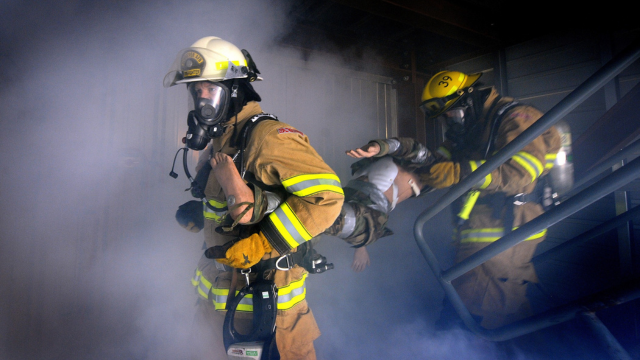

Effective workplace fire safety training UK employers provide should prepare employees to prevent fires where possible and respond correctly if one occurs. It is not simply a matter of watching a short presentation, collecting a certificate and assuming the organisation is compliant.
The appropriate training depends on the workplace.
A small office has different fire risks from a warehouse storing large quantities of combustible material. A hotel has different evacuation challenges from a factory. A workplace where people sleep, receive care or may need assistance escaping can require much more detailed arrangements.
That is why UK fire-safety law is largely risk-based.
Employers and other relevant dutyholders need to understand their premises, identify who may be at risk and establish suitable emergency procedures. Employees then need enough information, instruction and training to understand their role.
General fire safety courses can support that process, but training should connect with the employer’s own fire-risk assessment and evacuation plan.
This guide explains the legal framework, essential employee knowledge, course options, certification, workplace compliance and the practical benefits of integrating workplace fire safety training UK into wider health and safety management.
What Is Workplace Fire Safety Training and Why Is It Important?
Workplace fire-safety training teaches employees how to reduce fire risks, prevent hazards and respond appropriately if a fire or fire alarm occurs.
Training can include:
- recognising common fire hazards and risks;
- understanding alarm procedures and warning systems;
- locating escape routes and emergency exits;
- evacuating safely;
- reporting hazards and unsafe conditions;
- understanding fire doors and their purpose;
- knowing assembly arrangements and procedures;
- using firefighting equipment where appropriate.
The exact content should reflect the workplace, premises and level of risk.
An employee does not necessarily need specialist fire-engineering knowledge.
They do need to know what they are expected to do during a fire emergency.
Training connects the risk assessment with real behaviour
A fire-risk assessment can identify excellent control measures and safety precautions on paper.
Those measures can still fail if employees do not understand or follow them.
Imagine a building has two protected escape routes.
If staff regularly store deliveries in one route because nobody explained its importance, the written fire strategy and evacuation plan are undermined.
Similarly, an organisation might install fire doors but allow employees to prop them open routinely.
Training helps people understand why these fire-safety controls and preventive measures exist.
Employees need to know what happens during an alarm
In a genuine emergency, hesitation and confusion create risk.
Employees should already know basic questions such as:
Where is the nearest suitable exit?
Should I use a lift?
Where do I assemble?
Who calls the fire and rescue service?
Do I have any specific responsibility?
What happens if my usual escape route cannot be used?
A fire is the wrong time to start reading an evacuation procedure or emergency plan for the first time.
Why Fire Safety Training Is Important for UK Workplaces
Workplace fire training has both a legal and practical purpose.
For England and Wales, the workplace fire safety training UK Order places substantial duties on the Responsible Person.
In a workplace, this will usually be the employer where the workplace is under its control.
The Responsible Person must assess fire risks and take appropriate precautions and protective measures.
That includes informing, instructing and training employees.
Fire safety responsibilities are risk-based
There is no single fire-safety arrangement or workplace procedure suitable for every UK business.
The fire-risk assessment should consider matters such as:
- sources of ignition;
- combustible materials;
- people at risk;
- escape arrangements;
- fire detection and warning;
- firefighting equipment;
- emergency planning.
The resulting controls and precautions should be proportionate to the circumstances.
A small ground-floor office with straightforward escape routes may require relatively simple arrangements.
A large multi-floor building with shift work, visitors and people requiring evacuation assistance will need more detailed planning and emergency procedures.
Fire safety law differs across the UK
The term workplace fire safety training UK can create the impression that one identical statute applies nationwide.
It does not.
In broad terms:
England and Wales primarily use the Regulatory Reform (Fire Safety) Order 2005.
Scotland primarily uses the Fire (Scotland) Act 2005 and workplace fire safety training UK (Scotland) Regulations 2006.
Northern Ireland primarily uses the Fire and Rescue Services (Northern Ireland) Order 2006 and Fire Safety Regulations (Northern Ireland) 2010.
The basic principles are similar: assess risks, implement precautions, provide information and train staff.
However, employers should use guidance applying to their own jurisdiction rather than assuming every English rule, regulation or guidance document applies throughout the UK.
Essential Fire Safety Skills and Knowledge for Employees
Most employees do not need to become fire-safety specialists.
They do need reliable practical knowledge, awareness and emergency-response skills.
Understanding how fires start
Basic fire awareness normally introduces three ingredients necessary for combustion:
heat, fuel and oxygen.
Removing one of those elements can prevent or suppress combustion.
This helps employees understand why apparently ordinary workplace behaviour can create fire risks.
For example, combustible materials stored next to an inappropriate heat source can provide both fuel and ignition conditions.
Recognising hazards
Employees should recognise hazards and unsafe conditions relevant to their workplace.
Examples include:
- damaged electrical equipment;
- overloaded sockets;
- inappropriate storage;
- combustible waste;
- blocked escape routes;
- wedged fire doors;
- unsafe hot work.
Training should focus on realistic workplace risks.
A generic slideshow about industrial chemicals may offer little value to office employees if it never explains what they should do about blocked corridors, electrical equipment or other everyday hazards.
Understanding alarm arrangements
Employees need to recognise the fire warning.
That may be an audible alarm, visual warning or another system appropriate to the premises.
They should know what the alarm means and how to respond.
An alarm should not trigger a debate about whether the situation is probably a drill.
Employees should follow the established emergency procedures and evacuation instructions.
Knowing escape routes
Workers should know the escape arrangements relevant to where they work.
This includes alternative routes and emergency exits where appropriate.
People often instinctively leave by the door they normally use.
That route may not be safe during a fire.
Fire drills and evacuation exercises help employees practise responding differently.
Fire doors
Fire doors can help restrict the movement of fire and smoke.
Employees therefore need to understand why they should not be:
- wedged open improperly;
- obstructed;
- damaged;
- prevented from closing.
Something as simple as holding a fire door open permanently can compromise part of the building’s fire strategy and passive fire protection.
Assembly arrangements
Evacuation is not complete simply because someone has left the building.
Workers may need to report to an assembly point or follow another accountability procedure.
Returning to the building for a phone, bag or laptop can also create unnecessary risk.
Re-entry should follow the organisation’s established procedure and instructions from authorised personnel.
Best Workplace Fire Safety Training Courses in the UK
There is no universal “best” fire-safety course.
The appropriate training depends on the employee’s responsibilities, workplace risks and level of competence required.
General employee fire-awareness training
Basic awareness courses can introduce employees to:
- fire prevention;
- alarms and warning systems;
- evacuation;
- escape routes;
- fire doors;
- workplace responsibilities.
This type of training is useful for ordinary employees when combined with information about their actual workplace.
The limitation is important.
A generic course cannot tell a learner where the fire exits are in their own building.
That must come from site-specific induction, local instruction and workplace procedures.
Fire marshal or fire warden training
Some employers nominate employees to assist with fire-safety arrangements.
They are commonly called:
- fire wardens;
- fire marshals.
Their responsibilities vary.
They may help:
- check areas during evacuation;
- direct people towards exits;
- report whether allocated areas appear clear;
- monitor routine fire-safety issues;
- support drills and evacuation exercises.
There is no reason to assume every employee needs fire-marshal training.
The number of people required and their duties should come from the fire-risk assessment, emergency plan, staffing arrangements and premises.
Training should match those responsibilities and the level of competence required.
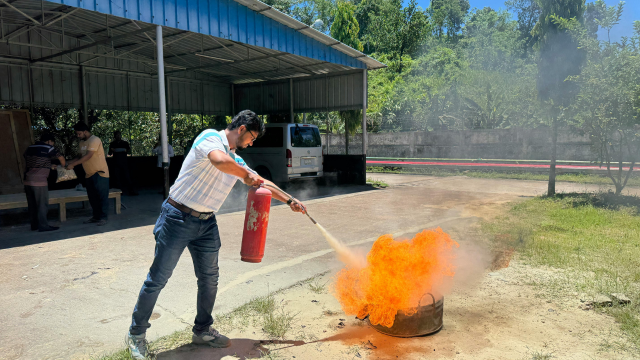
Fire-extinguisher training
Employees may receive additional training where the fire strategy expects particular staff to use portable firefighting equipment.
GOV.UK guidance states that staff should be trained to use firefighting equipment where necessary.
That does not mean everyone should attempt to fight a fire.
Life safety and evacuation come first.
Someone should not put themselves at unnecessary risk trying to save property.
Training should clarify when equipment might be used and, equally importantly, when the appropriate response is to evacuate.
Specialist workplace training
Some premises require additional or more specialised training.
Examples can include workplaces involving:
- flammable substances;
- complex industrial processes;
- sleeping accommodation;
- large public occupancies;
- healthcare or care environments.
Employees with specific responsibilities may need considerably more than general fire awareness, particularly where the workplace presents higher or more complex risks.
Training Arena health and safety learning
Training Arena currently offers Health and Safety in the Workplace Fundamentals and Overview.
The course is self-paced, approximately 20 hours in duration according to the current page, and includes a module covering fire and electrical safety.
For an employee or manager looking for broader health and safety awareness, this type of course can help introduce fire hazards within a wider workplace-safety and risk-awareness context.
Training Arena issues a certificate of completion.
However, employers should avoid assuming that a generic online certificate automatically satisfies their legal fire-training obligations.
Site-specific training is still necessary.
For example, the employee needs to know:
- the actual alarm signal;
- the actual escape routes;
- the assembly procedure;
- relevant local hazards.
These cannot be learned from a generic national course alone.
Comparing common training options
| Training type | Typical learner | Main purpose |
| General fire awareness | Most employees | Basic prevention and emergency knowledge |
| Site-specific induction | New employees | Local alarms, exits, procedures and hazards |
| Fire warden/marshal training | Nominated employees | Additional evacuation and monitoring duties |
| Fire-extinguisher training | Staff expected to use equipment | Safe use where appropriate |
| Specialist training | Higher-risk or complex workplaces | Risk-specific competence |
| Training Arena broader safety course | Employees/managers seeking flexible awareness | General health-and-safety learning including fire safety |
The correct combination is determined by the workplace, risk profile and employee responsibilities rather than by the popularity of a particular certificate.
Fire Safety Training Requirements, Certification, and Professional Development
Employers often ask whether workplace fire training is legally required.
For relevant workplaces, the answer is yes: appropriate employee fire-safety information, instruction and training forms part of the legal framework.
However, the law does not simply say:
“Buy one particular certificate every year.”
Training on recruitment
Employees should receive relevant training when they begin work.
This should happen early enough that they understand what to do in an emergency.
Fire-safety induction may include:
- alarm recognition;
- evacuation routes;
- assembly arrangements;
- reporting procedures.
Employees should not need to work for months before learning the evacuation procedure and emergency arrangements.
Training when risks change
Additional training may be needed when the risk changes.
Examples include:
- moving premises;
- changing layout;
- introducing new processes;
- installing new equipment;
- changing evacuation arrangements.
Temporary conditions can also matter.
Construction work inside an occupied building may block a normal route or change access arrangements.
Periodic refresher training
The workplace fire safety training UK Order requires training to be repeated periodically where appropriate.
There is no single universal statutory rule that every ordinary employee must complete exactly one certified online fire course every 12 months.
Frequency should reflect risk, staff turnover, changes and the effectiveness of existing fire-safety arrangements.
What about fire drills?
For England, current GOV.UK workplace guidance recommends at least one fire drill each year and recording the results.
The detailed guidance also allows the fire-risk assessment to indicate whether drills should be more frequent.
Scotland’s general non-residential guidance similarly indicates a minimum annual evacuation drill, with six-monthly drills potentially more appropriate for many premises.
Some specialised settings require different approaches.
Does a fire-safety certificate expire?
There is no universal UK statutory expiry date applying to every general fire-awareness certificate.
A training provider may assign its own recommended renewal period.
The employer’s legal question is different:
Are employees still adequately trained for the actual risk?
A three-year-old certificate provides limited reassurance if the building, evacuation procedure and employee’s responsibilities have all changed since the training.
Professional development for fire-safety responsibilities
Employees taking greater responsibility may need further development.
Someone asked to assist with routine checks or evacuation does not necessarily require the same competence as somebody conducting a complex fire-risk assessment.
Employers should distinguish:
awareness → additional workplace responsibility → specialist professional competence.
These are different levels of development and fire-safety training.
Workplace Fire Safety Responsibilities, Procedures, and Best Practices
Fire safety depends on both organisational systems and employee behaviour.
The Responsible Person in England and Wales
The Responsible Person carries the primary duties under the workplace fire safety training UK Order.
In a workplace compliance this is generally the employer where the workplace is under its control.
Responsibilities include:
- completing the fire-risk assessment;
- implementing fire precautions;
- planning for emergencies;
- providing information;
- providing instruction and training.
The Responsible Person can obtain assistance.
That does not automatically transfer away the underlying legal responsibility.
Recording requirements have strengthened
Since October 2023, Responsible Persons in England and Wales have stronger recording duties.
They must record the fire-risk assessment in full and their fire-safety arrangements.
Employers should therefore be cautious about relying on older guidance suggesting that recording is only required once five employees are reached.
That threshold no longer reflects the current England-and-Wales recording framework following the 2023 changes.
Fire-risk assessment
The fire-risk assessment is the foundation of the system.
It broadly involves:
- identifying fire hazards;
- identifying people at risk;
- evaluating and reducing risk;
- developing appropriate precautions and emergency arrangements;
- reviewing the assessment.
It should reflect the actual premises.
Copying another company’s assessment and changing the name at the top does not create a meaningful risk assessment.
Emergency plan
The organisation needs suitable emergency procedures.
These should cover matters such as:
- raising the alarm;
- evacuation;
- contacting emergency services;
- assisting people who need help;
- accounting for occupants where appropriate;
- responsibilities of nominated staff.
Plans should be understandable.
A procedure that only senior managers can interpret is unlikely to work well in an emergency.
People who need assistance
Evacuation arrangements need to consider people who may need help.
That can include some people with:
- mobility impairments;
- sensory impairments;
- cognitive impairments.
Visitors may also be unfamiliar with the building.
The fire strategy should not simply assume that everyone can hear an alarm, use stairs and find an exit unaided.
Escape routes
Escape routes should remain usable.
Employees should report problems such as:
- stored boxes;
- locked or obstructed exits;
- damaged doors;
- missing signs.
A clear route during this morning’s inspection can become blocked by an afternoon delivery.
Maintaining fire safety therefore requires everyday attention.
Employees have responsibilities too
Employees are not passive participants.
Under the England-and-Wales framework, they must take reasonable care and cooperate with their employer’s fire-safety arrangements.
They should also report serious or immediate safety concerns.
Employees should not interfere with safety measures.
Examples include:
- covering detectors;
- moving fire extinguishers without reason;
- blocking exits;
- improperly wedging fire doors.
Effective workplace compliance depends on these everyday behaviours.
Benefits of Fire Safety Training for Businesses and Employees

The primary benefit is straightforward: people are better prepared to respond safely.
But there are wider organisational advantages.
Faster response
Training reduces the time employees spend deciding what to do.
They are more likely to recognise the alarm and follow the planned route.
Better prevention
Employees who understand fire hazards are more likely to recognise unsafe conditions before a fire develops.
That makes training part of prevention rather than merely evacuation.
Stronger emergency preparedness
Drills test whether the plan works in practice.
They may reveal:
- confusion over assembly arrangements;
- unclear responsibilities;
- problems assisting particular employees;
- unsuitable routes.
Finding these weaknesses during a drill is preferable to discovering them during a real fire.
Improved compliance evidence
Training records, drill records and documented fire-safety arrangements can provide evidence that the organisation actively manages fire risk.
Certificates alone are not enough, but records form part of a stronger workplace compliance system.
Greater employee confidence
Emergencies are stressful.
Training cannot remove panic entirely.
It can provide a familiar sequence:
raise the alarm, evacuate, follow the agreed route and report appropriately.
Familiarity supports more decisive action.
Integration with wider health and safety
Fire safety should not operate as a completely separate annual exercise.
It connects with:
- electrical safety;
- hazardous substances;
- emergency planning;
- building management;
- contractor control.
Integrating it into ordinary health and safety systems makes it easier to identify how workplace compliance changes affect fire risk.
How to Choose the Right Workplace Fire Safety Training
Employers should begin with the risk assessment rather than selecting a course first.
Identify who needs training
All relevant employees need appropriate fire-safety information and training.
Additional responsibilities require additional development.
Ask:
Who is an ordinary employee?
Who has an evacuation role?
Who manages the premises?
Who is expected to carry out checks?
This prevents organisations from giving everyone identical training regardless of responsibility.
Check the syllabus
A suitable general course should address relevant fundamentals such as:
- causes of fire;
- prevention;
- alarms;
- evacuation;
- employee responsibilities.
Fire-warden training should go further.
Include workplace-specific instruction
This is essential.
Generic workplace fire safety training UK can explain principles.
They cannot replace local knowledge.
After training, employees should know the procedure in the building where they actually work.
Consider practical exercises
Online learning can efficiently cover awareness and theory.
Practical drills test whether people can follow the plan.
For employees expected to use firefighting equipment, appropriately supervised practical instruction may also be valuable.
The training method should match the competence required.
Check provider claims
Be cautious about phrases such as:
“legally approved”
“fully compliant”
“guarantees compliance”
A course provider cannot guarantee the employer’s entire fire-safety compliance simply by issuing certificates.
Compliance depends on the risk assessment, premises, equipment, maintenance, emergency arrangements, staff competence and numerous other factors.
Keep training under review
The best course today may not remain sufficient if:
- the workplace expands;
- new hazards are introduced;
- employee responsibilities change.
Training should develop alongside the organisation.
Future Trends in Workplace Fire Safety and Health and Safety Training
Fire safety remains fundamentally practical, but the way organisations manage and deliver it is changing.
More blended training
Many employers are likely to continue combining online theory with premises-specific instruction and drills.
This can work well.
Employees can learn general principles online, then practise their local evacuation procedure at work.
The danger is treating the online component as the whole system.
Digital records
Training records, risk assessments, equipment inspections and drill results are increasingly managed digitally.
This can help organisations identify:
- overdue training;
- recurring drill problems;
- incomplete actions.
Technology improves visibility.
It does not correct unsafe behaviour automatically.
Better integration with building information
Modern building-management systems can provide information about alarms, emergency lighting and other safety systems.
In more sophisticated premises, fire-safety management may increasingly use connected data to support maintenance and assurance.
Human judgement remains necessary to interpret what the information means.
Greater attention to competence
Recent legislative reforms following major building-safety failures have placed increasing emphasis on accountability, information and competence.
This is particularly relevant when employers appoint specialists.
The more complex the premises and fire risk, the less appropriate it becomes to assume that a basic awareness course creates specialist competence.
Inclusive evacuation
Future training is also likely to place greater emphasis on whether evacuation procedures work for the full range of people using the building.
Training and drills should increasingly test:
- accessibility;
- communication;
- assistance arrangements.
A procedure is not effective merely because most employees can follow it.
Scenario-based learning
Scenario exercises can make emergency procedures more realistic.
Instead of rehearsing an identical route every time, an organisation might test what staff do if a particular route is unavailable.
This exposes assumptions and improves understanding of alternative arrangements.
Key Takeaways
Effective workplace fire safety training UK employers provide should be based on the actual fire risk rather than treated as an annual certificate-buying exercise.
The main points are:
- employers and relevant dutyholders have legal fire-safety responsibilities;
- England and Wales, Scotland and Northern Ireland operate under different fire-safety legislation;
- employees need adequate information, instruction and training;
- training should take place on induction and when relevant risks or responsibilities change;
- refresher training should be provided periodically where appropriate;
- current England guidance recommends at least one recorded fire drill per year, with more frequent drills where risk indicates;
- Scotland’s general guidance similarly recommends at least annual drills, with six-monthly drills appropriate for many premises;
- general fire safety courses can support awareness but cannot replace premises-specific instruction;
- fire wardens or marshals need training matched to their additional responsibilities;
- employees should understand alarms, escape routes and emergency procedures;
- Training Arena’s broader workplace-safety course includes fire and electrical safety and can support awareness;
- a completion certificate alone does not establish full workplace compliance;
- fire safety should form part of wider health and safety management.
FAQ
What is workplace fire safety training?
Workplace fire-safety training teaches employees how to prevent fires, recognise hazards and respond to alarms or emergencies. It commonly covers fire prevention, evacuation, escape routes, fire doors, employee responsibilities and relevant workplace procedures.
Why is fire safety training important in the UK workplace?
It helps employees understand how to prevent fire and what to do if one occurs. Providing adequate staff fire-safety information, instruction and training is also part of employers’ legal responsibilities under the applicable national fire-safety framework.
What are the requirements for workplace fire safety training?
Requirements depend on the workplace compliance and UK jurisdiction. Training should be adequate for the risks and normally be provided when employees start work, when new or increased risks arise and periodically where appropriate. Additional training may be required for people with fire-warden, firefighting or other specific responsibilities.
Which fire safety training course is best in the UK?
There is no universal best course. General employees may need fire-awareness learning plus site-specific induction, while nominated fire wardens need more detailed training. Higher-risk environments may require specialist programmes. The fire-risk assessment should determine what is appropriate.
What skills are taught in fire safety training?
Depending on the programme, employees may learn hazard recognition, fire prevention, alarm procedures, safe evacuation, fire-door awareness and workplace responsibilities. Additional courses may cover fire-warden responsibilities or safe use of firefighting equipment.
Who should complete workplace fire safety training?
Employees should receive fire-safety training appropriate to their role and the risks of the premises. People with additional responsibilities, such as nominated wardens or staff expected to use firefighting equipment, may require further training.
What are the benefits of fire safety training for employees?
Benefits include better hazard awareness, greater confidence during emergencies, understanding of evacuation procedures and a clearer appreciation of individual responsibilities. Training can also help employees recognise unsafe conditions before an incident occurs.
How often should workplace fire safety training be completed?
There is no single UK-wide rule requiring every employee to retake exactly the same certified course annually. Training should be refreshed periodically as appropriate and when risks, procedures or responsibilities change. Current England guidance recommends at least one recorded fire drill each year, while higher-risk workplace compliance may need drills or refresher activity more frequently.

Conclusion
Effective workplace fire safety training UK organisations provide is about creating practical readiness rather than collecting certificates.
Employees need to understand fire risks, recognise the alarm, know how to evacuate and follow the organisation’s emergency procedures. People with additional responsibilities require training suited to those responsibilities.
Flexible fire safety courses can contribute to this development. Training Arena’s broader Health and Safety in the workplace compliance programme, for example, includes fire and electrical safety and can help build general awareness. That learning should still be combined with instruction about the employee’s actual building, escape routes, alarm arrangements and emergency plan.
Employers also need to remember that training is only one part of workplace compliance.
A suitable fire-risk assessment, functioning alarms, maintained equipment, clear exits, appropriate emergency arrangements, competent support and effective drills all contribute to the wider system.
Training should therefore evolve when the workplace changes.
When workplace fire safety training UK is integrated into day-to-day health and safety management rather than treated as a once-a-year administrative exercise, employees are more likely to understand not only what the rules say but what they need to do when those rules matter most.