

Stock problems become expensive surprisingly quickly. A product that appears available online may actually be sitting at zero. Popular items can sell out while slow-moving products occupy valuable storage space. Staff may spend hours correcting spreadsheets because the numbers held by the shop, warehouse and accounting team no longer agree.
The best inventory management software for small businesses helps bring these processes together. It can provide clearer inventory tracking, automate parts of stock control, support purchasing and order fulfilment, and show where products are located across shops or warehouses.
There is no single system that suits every small business. A high-street retailer using one till has very different requirements from an ecommerce company selling through several marketplaces or a wholesaler operating multiple warehouses.
This guide compares the leading options and, more importantly, explains which type of business each one suits.
What Is Inventory Management Software and Why Is It Important?
Inventory warehouse management software records the products a business owns, purchases, stores, sells and transfers.
At its simplest, the software shows how much stock is available. More capable systems can track incoming purchase orders, reserved products, sales, returns, transfers, batches, serial numbers, multiple locations and reorder levels.
This creates a central record rather than relying on several disconnected spreadsheets.
For example, when an item is sold, an integrated system can reduce the available quantity. When new products arrive from a supplier, staff can record the receipt. When stock moves between two branches, the transfer can be documented rather than manually adjusting two spreadsheets.
Modern systems often extend well beyond basic inventory tracking. They can connect with ecommerce stores, point-of-sale systems, accounting platforms, shipping services and marketplaces.
The result is potentially better visibility across the entire route from purchasing to sale.
Why Inventory Management Matters for Small Businesses
Stock ties up cash.
Buying too little can lead to stockouts and lost sales. Buying too much means money remains invested in products that may take months to sell, become obsolete or require discounting.
Small businesses often have less room for these mistakes than large companies.
Good inventory warehouse management helps answer practical questions such as:
How much do we actually have?
Which products are selling?
What needs reordering?
Which items have barely moved?
What stock has already been committed to customer orders?
Which location holds a particular item?
Accurate information also reduces the amount of time employees spend manually checking shelves, reconciling sales with stock records or searching for missing products.
This is why effective stock control is not merely a warehouse issue. It affects purchasing, cash flow, sales, customer service and accounting.
Essential Features to Look for in Inventory Management Software
A small retailer does not necessarily need enterprise-grade supply-chain software. Equally, choosing an overly basic system can create another expensive migration once the business expands.
Start with the functions required today and the complexity likely within the next few years.
For many businesses, important features include:
- real-time stock quantities;
- purchase and sales orders;
- low-stock alerts and reorder points;
- barcode or QR-code scanning;
- product variants and SKUs;
- returns and adjustments;
- reporting;
- ecommerce and marketplace integrations;
- POS integration;
- accounting integration;
- multi-location inventory.
Businesses with more complicated stock may also need serial-number tracking, batch and expiry tracking, assemblies, bills of materials, bin locations or more advanced warehouse management.
Usability matters just as much as functionality. Sophisticated software creates little value if employees continue keeping unofficial spreadsheets because they find the system too difficult.
Best Inventory Management Software for Small Businesses
Several platforms stand out, but for different reasons.
| Software | Particularly suitable for | Notable strength |
| Zoho Inventory | General small-business inventory | Broad inventory and order functions |
| Square for Retail | Small physical retailers | POS and inventory in one system |
| Shopify | Ecommerce and omnichannel retailers | Online and in-store stock synchronisation |
| Sortly | Simple inventory and asset tracking | Easy barcode/QR-based organisation |
| inFlow Inventory | Product businesses needing structured stock operations | Purchasing, sales and barcode workflows |
| Cin7 Core | Growing multichannel businesses | Advanced inventory and integrations |
| Unleashed | Wholesalers, manufacturers and complex product businesses | Deep inventory and warehouse controls |
Zoho Inventory
Zoho Inventory is one of the more versatile choices for a small company that wants dedicated inventory software without immediately moving into enterprise systems.
Its current feature set includes purchase orders, multi-warehouse warehouse management, transfers, picklists, bin locations, serial and batch tracking, barcode generation and scanning, sales orders, multichannel sales, invoicing and returns. It also integrates with platforms including Shopify, WooCommerce, Xero and QuickBooks Online.
That breadth makes it particularly suitable for businesses that sell physical products through several channels and want inventory to remain separate from their ecommerce platform.
Square for Retail
Square is especially appealing to small shops that already need a point-of-sale system.
Its UK Free retail plan currently has no monthly software charge and includes a POS app, online store and basic inventory functionality. Payment-processing charges still apply. The Plus tier introduces more advanced inventory functions and barcode-label printing.
For a small physical retailer, combining payments, checkout and inventory can be simpler than maintaining separate systems.
Shopify
Shopify is a natural candidate when ecommerce is central to the business.
Its inventory system tracks stock across sales channels and locations and distinguishes between quantities that are on hand, available, committed, unavailable or incoming. Shopify also supports purchase orders, transfers and inventory reporting.
Businesses using Shopify POS can connect online and physical-store inventory within the same commerce system, which is particularly useful for omnichannel retailers.
Sortly
Sortly takes a relatively visual approach to inventory.
Businesses can organise products and other items using photographs, folders, barcodes and QR codes. Its current free plan permits 100 unique items and one user, making it useful for testing basic inventory warehouse management before paying for a larger subscription.
Sortly is especially useful where simplicity is more important than sophisticated purchasing, ecommerce or financial functionality.
inFlow Inventory
inFlow is built specifically around stock, purchasing, sales and fulfilment rather than being a general business application.
It supports integrations with ecommerce and accounting systems including Shopify, Amazon, WooCommerce, Xero and QuickBooks Online.
It is worth considering when a product business has outgrown basic spreadsheet-based stock control but does not necessarily require a large enterprise resource planning system.
Cin7 Core
Cin7 Core targets businesses with more complicated product operations.
Its current plans include unlimited inventory locations, purchase-order warehouse management, accounting integrations and connections with ecommerce applications. Barcode scanning and warehouse-management functionality are also available, while more advanced plans and add-ons extend manufacturing, automation and forecasting.
The breadth comes at a considerably higher price than simple small-business inventory applications, so it is more appropriate once operational complexity justifies the investment.
Unleashed
Unleashed is another stronger option for growing product businesses, including wholesalers, distributors and manufacturers.
Current functionality includes multi-warehouse management, stock transfers, stock counts, batch and serial tracking, sales orders, purchasing and manufacturing functions. It also integrates with Xero, QuickBooks Online and ecommerce services.
For a very small shop, it may be more system than necessary. For a product company dealing with several warehouses and more detailed purchasing requirements, it becomes much more relevant.
Best Free Inventory Management Software
“Free” inventory software requires careful examination.
A free plan may restrict users, products, orders, locations, reports or integrations. There may also be transaction fees elsewhere in the system.
For UK retailers, Square for Retail Free is particularly useful because it combines basic inventory with POS functionality without a monthly software subscription. Businesses still pay applicable payment-processing charges.
Sortly Free currently allows 100 unique items and one user. That may be sufficient for a microbusiness, equipment register or very small stock catalogue.
Zoho Inventory also advertises a forever-free plan. Published allowances can vary according to regional edition, so UK businesses should confirm the exact limits presented when opening their account rather than relying on figures published for another country.
Free software works best when the limitations match the way the business actually operates. Choosing solely because the initial subscription is £0 can prove expensive if the organisation has to migrate six months later.
Best Inventory Management Software for Retail Businesses
For a conventional small retailer, Square and Shopify are particularly strong because inventory sits close to the sale itself.
Square for Retail can automatically connect physical transactions with product quantities within the Square ecosystem. Its paid retail plan adds functions such as advanced inventory tools, barcode-label printing and cost-of-goods-sold reporting.
Shopify becomes especially attractive when the retailer sells both online and in store. Shopify POS and its ecommerce platform can share inventory information, reducing the risk of treating digital and physical stock as completely separate pools.
Larger retailers with more complicated purchasing, warehouse or wholesale requirements may eventually need a dedicated inventory platform such as Cin7 or Unleashed behind their sales channels.
Best Inventory Management Software for Ecommerce Businesses
Ecommerce creates a particular inventory problem: the same physical products may be offered through several digital channels simultaneously.
Shopify is an obvious choice for businesses whose primary store already runs on Shopify. Its native inventory capabilities cover purchasing, transfers, location warehouse management and fulfilment without requiring a separate application for basic operations.
Zoho Inventory is useful where a business wants a separate inventory centre connected with ecommerce channels. Its current integrations include Shopify, WooCommerce and Etsy alongside accounting and shipping applications.
Cin7 Core and Unleashed become stronger candidates as channel count, warehouse complexity or purchasing requirements increase.
The important feature is inventory synchronisation. If five products remain and two marketplaces both continue displaying five independently, overselling becomes much more likely.
Best Inventory Management Software for Multi-Location Businesses

Once stock is held in several places, knowing the total quantity is not enough.
A business needs to know where each unit is.
Shopify supports inventory across multiple fulfilment, warehouse and retail locations, with transfers between locations and a central view of different stock states.
Zoho Inventory provides multi-warehouse functionality, transfers and bin-related features depending on plan. Cin7 Core currently includes unlimited inventory locations across its principal Core tiers.
Unleashed is particularly relevant when multi-location stock develops into genuine warehouse management, including transfers, stock counts, serial or batch tracking and additional warehouse functionality.
Before choosing a platform, check whether “multiple locations” means only separate stock totals or genuinely supports the transfer, picking and receiving processes the business needs.
Best Inventory Management Software With Barcode Scanning
Barcode scanning can reduce manual product selection and speed up receiving, stock counts, transfers and checkout.
Zoho Inventory supports barcode generation and scanning, including scanning for relevant inventory transactions. In June 2026 it also introduced embedded barcode functions capable of carrying details such as quantities, batches and serial numbers within its Enterprise plan.
Shopify combines barcode technology with both POS and inventory workflows. Its current retail inventory tools support barcode-based physical stock counts, while compatible POS hardware can scan products during checkout.
Cin7 also includes barcode scanning within its current inventory and warehouse-management offering.
The best choice depends on where scanning happens. A small shop may only need checkout and occasional stock counts. A warehouse may need receiving, bin movements, picking and dispatch to be scan-driven.
Best Inventory Management Software With POS Integration
Retail businesses should normally avoid having their till and stock records operate as unrelated systems.
Square for Retail is one of the simplest choices because the POS and inventory functionality belong to the same platform.
Shopify provides a similarly integrated approach for businesses operating Shopify ecommerce alongside Shopify POS. Online and in-store activity can draw from centrally managed inventory.
Businesses using a different POS should examine whether their preferred inventory system has a warehouse management reliable native connector before purchasing either product.
An integration can be advertised as available without necessarily synchronising every field the business needs. Confirm how it handles sales, refunds, product variants, stock adjustments and multiple locations.
Best Inventory Management Software With Accounting Integration
Inventory and accounting affect each other closely.
Purchases create liabilities or payments. Sales create revenue. Stock has a cost, and the movement of goods can affect cost-of-sales calculations and financial reporting.
Zoho Inventory currently provides accounting integrations with Zoho Books, Xero and QuickBooks Online.
Cin7 Core connects with Xero and QuickBooks Online, while Unleashed also supports both platforms. Xero’s UK App Store currently lists Cin7 Core and Unleashed among inventory applications designed to work with its accounting ecosystem.
inFlow likewise lists integrations including Xero and QuickBooks Online.
Do not assume that “integrates with Xero” or “integrates with QuickBooks” tells the whole story. Check which transactions synchronise, which platform owns product records, how tax is handled and what happens when data is edited in both systems.
Your accountant or bookkeeper can help assess the proposed workflow before implementation.
Best Inventory Management Software for Order Management
Good inventory systems should connect stock availability with orders rather than recording the two separately.
Zoho Inventory supports sales orders, purchase orders, backorders, dropshipping, packing, shipping and returns.
Shopify provides centralised order warehouse management alongside inventory and fulfilment, making it particularly convenient for ecommerce merchants already operating within its ecosystem.
Unleashed provides a more extensive sales-order process including quotations, invoices, backorders, shipments and pick lists alongside purchasing.
The appropriate level of complexity depends on the business. A local shop may need little beyond purchase receiving and sales. A wholesaler may need quotations, allocations, backorders, partial fulfilment and more detailed purchasing controls.
Best Inventory Management Software for Inventory Tracking
For straightforward inventory tracking, Sortly has an advantage in simplicity. Visual records, mobile access and barcode or QR-code functions can work well where the main requirement is knowing what the business has and where it is.
Zoho Inventory goes considerably further by linking quantities with orders, multiple warehouses, serial numbers, batches and transfers.
Shopify is stronger when inventory tracking needs to follow actual retail and ecommerce sales within the same commerce environment.
Cin7 and Unleashed are better suited once tracking expands into more sophisticated purchasing, fulfilment or warehouse processes.
The important distinction is between counting inventory and managing inventory. A business may start by needing only accurate quantities but eventually require detailed information about purchasing, commitments, transfers and fulfilment.
Best AI-Powered Inventory Management Software
AI is beginning to influence inventory warehouse management most visibly through forecasting, recommendations, data interpretation and workflow assistance.
Cin7 currently offers ForesightAI Forecasting as an add-on. The company describes it as using forecasting and inventory optimisation to help businesses predict demand and make replenishment decisions.
Unleashed’s current product range includes Evo, with AI-related feed, analytics and Copilot capabilities depending on package and add-on configuration.
AI forecasting can be valuable, but businesses should remain realistic about what it can know.
Historic sales do not always predict sudden trends, supply disruption, unusual promotions or changes in consumer demand. Poor underlying data also leads to poor recommendations.
Treat AI as decision support rather than an automatic purchasing authority.
How to Choose the Best Inventory Management Software
Start by documenting the way stock actually moves through the business.
Follow one product from supplier to customer.
Who creates the purchase order? Who receives it? Is stock placed into particular bins? Where can it be sold? Does a website need the quantity immediately? Who approves adjustments? How are returns handled? Which information needs to reach the accounts?
Then compare software against those real processes.
A useful shortlist should consider:
- the number of products or SKUs;
- sales volume;
- users and locations;
- retail, ecommerce or wholesale channels;
- barcode requirements;
- accounting and POS integrations;
- purchasing and order-management complexity;
- batch, serial or expiry tracking;
- reporting requirements;
- expected growth.
Price should be calculated at the scale the business expects to reach, not merely the cheapest advertised starting point.
Consider implementation costs as well. Hardware, barcode printers, scanners, data migration, training and integrations can all add to the real cost.
Most importantly, test the software with realistic workflows before committing. Process several genuine products, purchase orders, sales, returns and transfers during the trial.
How Inventory Management Software Reduces Costs and Errors
Inventory software can reduce costs primarily by giving the business better information and reducing unnecessary manual work.
Consider purchasing. Without accurate stock information, an employee may reorder products that are already sitting in another location. Better visibility can reduce that risk.
Automation can also reduce repeated data entry. If an online sale updates inventory automatically, an employee does not need to reduce the quantity manually in a spreadsheet.
Barcode scanning can help prevent selecting the wrong item during receiving or counting. Reorder alerts can highlight products approaching agreed thresholds.
Reports can identify slow-moving products that are consuming storage space and cash.
However, software does not automatically produce savings.
If stock movements are not recorded, purchase orders are entered incorrectly or employees bypass the system, reports will still be wrong.
The quality of stock control depends on both technology and disciplined processes.
Benefits and Limitations of Inventory Management Software
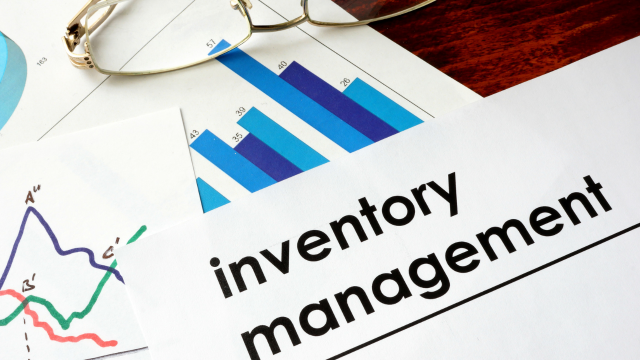
A well-implemented inventory platform can create one clearer view of products across the business.
Employees can spend less time checking separate records. Managers can see what needs purchasing. Online quantities can be updated faster. Multi-location businesses can understand where stock is held, and more advanced systems can support detailed warehouse management.
There are limitations.
Subscriptions can become expensive as orders, users or locations increase. Integrations sometimes require additional fees. Migrating existing product data may involve considerable cleaning, particularly where historical spreadsheets use inconsistent SKUs or descriptions.
The system also depends on accurate input.
If 50 products arrive but only 45 are recorded, software cannot magically know that another five exist. Physical counts and reconciliation therefore remain important.
Another risk is unnecessary complexity. Buying an enterprise-level application for a company with 40 products and one storeroom can make basic operations harder rather than easier.
Common Inventory Management Mistakes to Avoid
Poor inventory management often begins before software is selected.
Inconsistent product names and duplicate SKUs make migration difficult. Employees may also maintain personal spreadsheets because there is no agreed central process.
Another common mistake is ignoring physical inventory. Even well-integrated systems can diverge from reality because of damage, theft, unrecorded movements, fulfilment mistakes or returns.
Businesses should also avoid:
- reordering solely from habit rather than actual demand;
- failing to define reorder levels;
- giving unnecessary users permission to adjust quantities;
- ignoring slow-moving stock;
- connecting several systems without deciding which holds the master data;
- failing to test returns and refunds;
- overlooking backup, export and security arrangements.
A particularly important mistake is assuming implementation ends when the software goes live.
Processes should be reviewed once employees have used the system long enough to identify friction and recurring errors.
Future Trends in Inventory Management and AI
Inventory software is moving towards more connected and predictive systems.
Instead of simply reporting that an item has reached a low quantity, software increasingly attempts to estimate when stock may run out and how much should be reordered.
AI-driven forecasting is likely to become more common, particularly as inventory platforms combine historical sales with seasonality, purchasing patterns and other operational data.
Warehouse processes are becoming increasingly mobile as well. Barcode scanners, smartphones and dedicated warehouse deviceswarehouse management allow stock movements to be recorded at the point where they happen instead of being entered into a desktop application afterwards.
Automation between systems will continue to matter. A future small-business inventory workflow may connect the supplier order, warehouse receipt, ecommerce store, POS, shipping platform and accounting records with relatively little manual duplication.
This makes governance more important, not less.
Businesses still need to decide who can alter stock, how automated recommendations are approved, what happens when integrations fail and which system represents the authoritative record.
AI can improve the tools available for inventory tracking, but reliable operations will still depend on accurate data and sensible human decisions.
Key Takeaways
The best inventory warehouse management software for small businesses depends primarily on how products are bought, stored and sold.
Square for Retail is a practical option for smaller UK retailers that want POS and basic inventory in one platform. Shopify is particularly strong for ecommerce and omnichannel selling. Zoho Inventory provides broad dedicated inventory functionality for growing warehouse management small businesses.
Sortly offers a simpler approach to item tracking, while inFlow provides more structured product operations. Cin7 Core and Unleashed become more attractive as businesses require sophisticated purchasing, multiple locations, accounting integrations and deeper warehouse management.
Do not select software based only on its advertised number of features. Map the real workflow, test the essential integrations and calculate what the platform will cost at the scale the business expects to reach.
FAQ
What is the best inventory management software for small businesses?
There is no single option for every business.
Zoho Inventory is a strong general-purpose choice, Square for Retail suits small physical retailers, and Shopify is particularly useful for ecommerce and omnichannel businesses. Sortly works well for simpler tracking requirements, while Cin7 Core and Unleashed suit more complex product operations.
The best inventory management software for small businesses is the platform that matches the company’s sales channels, locations, product complexity and budget.
What is the best free inventory management software?
Square for Retail currently provides a UK Free plan with basic inventory functionality and no monthly software subscription, although payment-processing fees apply.
Sortly also offers a free plan, currently limited to 100 unique items and one user. Zoho Inventory publishes a forever-free option, although allowances can vary between regional editions.
Businesses should check whether a free plan has sufficient products, users, locations, orders and integrations before committing to it.
Which inventory software is best for ecommerce?
Shopify is particularly convenient for businesses already selling through a warehouse management Shopify store because ecommerce, inventory, orders and fulfilment operate within the same ecosystem.
Zoho Inventory, Cin7 and Unleashed are stronger alternatives where a business sells through several channels or needs more specialised inventory functionality behind its storefronts.
What features should inventory management software have?
Most small businesses should look for reliable inventory tracking, purchase orders, sales orders, stock adjustments, low-stock alerts, reporting and integrations with important sales or accounting systems.
Barcode scanning, multi-location stock, batches, serial numbers, bin locations and advanced warehouse functions may be important for more complex businesses.
Can inventory software integrate with accounting systems?
Yes. Several major inventory platforms integrate with accounting software.
Zoho Inventory, Cin7 Core, Unleashed and inFlow currently support connections with platforms including Xero and QuickBooks Online.
The exact information exchanged varies, so check how the integration handles sales, purchases, inventory values, tax and product information before implementation.
How does inventory management software reduce costs?
It can improve purchasing decisions, reduce duplicate data entry, highlight slow-moving products, provide low-stock alerts and make inventory discrepancies easier to identify.
Better stock control can also reduce the amount of money unnecessarily tied up in stock.
Savings are not automatic. They depend on accurate data, appropriate settings and warehouse management employees following the agreed process.
Is inventory management software worth it for a small business?
It can be worthwhile once manual methods make it difficult to maintain accurate stock information or coordinate sales, purchasing and fulfilment.
A very small business with a limited product range may manage adequately with simpler tools. As order volumes, sales channels or locations increase, dedicated software generally becomes more useful.
The relevant comparison is between the cost of the system and the time, errors and operational problems it may help reduce.
How do I choose the right inventory management software?
Map how stock moves through your business and list the functions that process requires.
Then compare systems according to product volume, users, locations, barcode needs, ecommerce channels, POS, accounting integration, order management and reporting.
Use a trial to test real workflows rather than relying solely on a sales demonstration.
The right best inventory management software for small businesses should improve visibility and control without introducing more complexity than the organisation needs.

Conclusion
Finding the best inventory management software for small businesses starts with understanding the operation rather than choosing the most familiar software name.
Retailers may benefit from Square’s close connection between POS and inventory. Ecommerce businesses may find Shopify’s unified online and physical stock particularly convenient. Zoho Inventory provides a broader dedicated system, while Sortly offers straightforward tracking for simpler inventories. Growing product businesses with demanding purchasing and warehouse management requirements may find platforms such as Cin7 Core or Unleashed more appropriate.
Whatever platform is selected, effective stock control still requires consistent processes. Products need accurate identifiers, receipts and transfers must be recorded, discrepancies need investigation and physical counts remain useful.
Software can make inventory tracking faster and more visible, while automation and AI can assist with forecasting and routine decisions. Neither removes the need for accurate data or warehouse management judgement.
Training Arena offers online learning across business, technology and related subjects for people looking to develop their knowledge further. Learning about inventory principles can provide a useful foundation, but effective inventory warehouse management ultimately comes from applying those principles to the particular products, processes and sales channels of a real business.