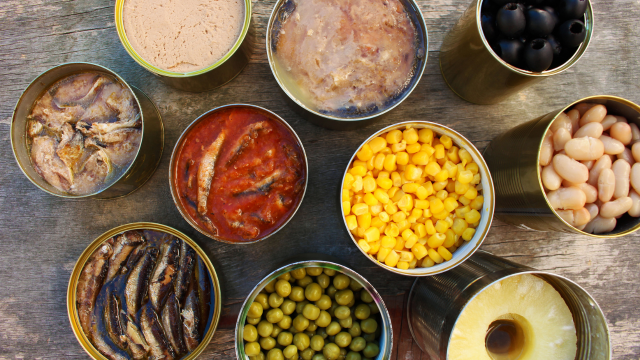

Can you reheat food safely? Yes, in most cases. Food that was cooked properly, cooled promptly and stored safely can generally be reheated once.
The main requirement is not simply to make the meal warm. Reheated food should be steaming hot throughout, including at its centre. A clean food thermometer reading of approximately 75°C at the thickest or coldest point is a useful practical check.
Safe reheating also depends on the food’s history. A high final temperature cannot reliably rescue leftovers that were left out overnight, stored beyond their safe period or repeatedly heated and cooled.
The basic UK household rules are straightforward:
- refrigerate leftovers within two hours;
- eat them within 48 hours or freeze them;
- reheat each portion only once;
- stir, turn or rearrange food for even heating;
- ensure there are no cold or lukewarm areas.
Reheat Until Piping Hot
Food should be piping or steaming hot all the way through before it is eaten.
The centre is often the coldest part. Lasagne may bubble around the edges while remaining cool in the middle, and meat can become hot outside while staying lukewarm near a bone.
Where practical, divide large portions into smaller pieces before reheating. This helps heat reach the centre without burning or drying the surface.
A thermometer can provide greater confidence. Insert a clean probe into the thickest or coldest section without allowing it to touch the container, baking tray or bone.
Approximately 75°C is a useful domestic benchmark, but it is not the only recognised safe time-and-temperature combination. UK commercial guidance also recognises 70°C for two minutes or 80°C for six seconds. For home leftovers, the most accessible FSA test remains whether the complete portion is steaming hot.
Do not partially warm food and leave it standing for later. It should remain safely chilled until you are ready to reheat it thoroughly and eat it promptly.
Stir If Using a Microwave
Microwaves can heat food unevenly. The edges may become extremely hot while cold pockets remain in the centre, so even reheating is important for food safety.
Place the food in a microwave-safe dish and spread it into an even layer. Break up dense clumps of rice, pasta or mashed potato before heating to encourage more uniform warming.
Add a small amount of water, stock, milk or sauce when the food is likely to dry out. Cover the container loosely with a vented microwave-safe lid to retain moisture and help steam circulate during the reheating process.
Pause the microwave halfway through and stir thoroughly. Move food from the outer edges towards the middle, turn solid pieces and separate overlapping portions so the leftovers heat evenly.
Follow any standing-time instructions after the microwave switches off. Heat continues to move through the food during this period, helping reduce cold spots and improve overall heat distribution.
Before eating, stir again and check the centre. The temperature of the plate or container does not prove that the food itself has reheated safely. The FSA specifically recommends stirring or turning microwaved leftovers and following the manufacturer’s standing instructions.
Reheat Only Once
Can you reheat food twice? UK household guidance recommends that you do not.
The same answer applies to can you reheat food more than once and can you reheat food multiple times. Each heating, cooling and refrigeration cycle creates another opportunity for bacteria to multiply or for the food to become contaminated, increasing the food safety risk.
The safest approach is to divide leftovers into meal-sized portions while they are cold. Reheat one portion and leave the rest refrigerated or frozen.
For example, do not heat a whole pan of curry, can you reheat food eat half, cool the remaining curry and reheat it again the next day. Remove only the serving you intend to eat before reheating.
Changing appliances does not create an additional safe cycle. Food heated in a microwave and then cooled before being placed in an air fryer has still been reheated more than once.
Any food left after the reheated meal should normally be discarded.
The Two-Hour Window
Cooked food that will not be eaten immediately should normally be cooled and placed in the fridge within two hours.
Use shallow containers and divide large quantities into smaller portions. A deep saucepan of curry, stew or pasta can remain warm in the centre long after its surface appears cool, slowing the cooling process.
Ordinary refrigerated leftovers should generally be eaten within 48 hours or frozen. The fridge should ideally remain between 0°C and 5°C.
Food left at room temperature overnight should be thrown away. Reheating it for longer cannot reliably can you reheat food reverse the effects of unsafe storage, particularly where bacteria have produced heat-resistant toxins.
The two-hour window applies especially to meat, poultry, seafood, eggs, dairy products, cooked rice and complete takeaway meals.
When you cannot establish how long a food has been unrefrigerated, the safest decision is not to eat it.
Reheating Food in Common Appliances
Different appliances affect texture and speed, but the final safety requirement is always the same: the food must become steaming hot throughout.
| Appliance | Best suited to | Main precaution |
| Microwave | Curries, soups, sauces and moist meals | Stir and observe standing time |
| Oven | Casseroles, pies, pizza and large portions | Check the centre, not only the surface |
| Air fryer | Chips, pizza, pastries and fried foods | Avoid overcrowding and turn halfway |
| Hob | Soups, stews, rice dishes and sauces | Stir frequently |
| Slow cooker | Hot holding after proper reheating | Do not use it to reheat chilled food slowly |
Can You Reheat Food in an Air Fryer?
Yes. People searching can you reheat food in air fryer appliances can safely use them for many solid leftovers.
Air fryers work particularly well for chips, pizza, roast potatoes, fried chicken, spring rolls, pastries and breaded food, providing a quick and crisp reheating method.
Approximately 160°C–180°C is a practical starting range for many refrigerated portions. Arrange pieces in one layer and leave enough space for hot air to circulate.
Turn the food or shake the basket halfway through. A crisp surface does not prove that a thick chicken piece, pie or filled pastry is hot in the centre.
Soups and loose sauces should never be poured directly into the basket. Use an approved heat-resistant container only where can you reheat food the appliance manufacturer permits it.
Can You Reheat Food in the Oven?
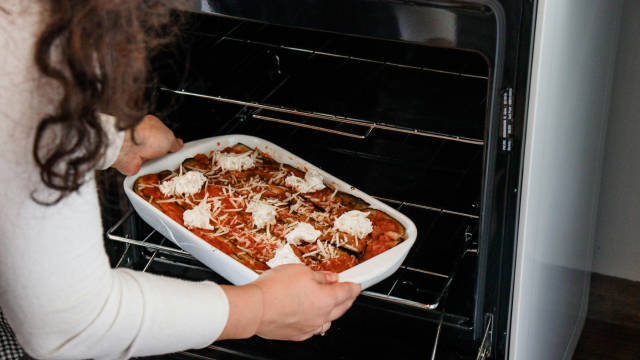
Yes. Can you reheat food in the oven effectively? The oven is one of the best options for casseroles, lasagne, pizza, baked pasta, pies, roast meat and larger quantities.
Use approximately 160°C–180°C unless the food instructions recommend a different setting.
Place the leftovers in an oven-safe dish. Add a little moisture to dry foods and cover casseroles or meat with foil during most of the reheating period.
Remove the foil near the end when you want to restore browning or crispness.
Remember that the oven setting is not the food’s internal temperature. A dish placed in a 180°C oven may still be cold in its centre,can you reheat food so always check the internal heat before eating.
Can You Reheat Food in a Slow Cooker?
Cold leftovers should not normally be reheated in a slow cooker.
Slow cookers raise food temperature gradually. Chilled food may therefore remain for too long within temperatures where bacteria can multiply.
Reheat the food rapidly on the hob, in an oven or microwave, or with another suitable appliance. Once it is thoroughly hot, it may be transferred to a preheated slow cooker for hot holding where the manufacturer permits it.
Therefore, can you reheat food in a slow cooker is generally answered no when the intention is to bring refrigerated food up to temperature.
Containers and Packaging
The material holding the food must be suitable for the appliance. A takeaway box being convenient does not mean it was designed for heating or high-temperature food preparation.
Can You Reheat Food in Styrofoam?
Can you reheat food in Styrofoam? The safe default is no unless the specific container is expressly marked as suitable for microwave heating.
Styrofoam is commonly used to describe expanded polystyrene foam. Foam cups, trays and takeaway boxes may soften, warp or melt when exposed to heat.
Transfer the food to a microwave-safe glass or ceramic dish. Never can you reheat food put polystyrene in an oven, air fryer, toaster oven or on a hob.
Official microwave guidance lists foam-insulated cups, plates, bowls and trays among containers that should not be used for microwave cooking.
Can You Reheat Food in a Plastic Container?
Can you reheat food in a plastic container? Only when it is clearly labelled for the appliance being used.
A microwave-safe container is not automatically oven-safe or air-fryer-safe. Storage tubs, yoghurt pots and single-use takeaway containers may warp or melt because they were not manufactured for high-temperature cooking.
Do not heat food in cracked, scratched, warped or damaged plastic. Where suitability is uncertain, transfer the meal to heat-resistant glass or ceramic cookware.
Can You Reheat Food That Says Do Not Reheat?
No. Can you reheat food that says do not reheat? A clear manufacturer’s warning should be followed.
The instruction may reflect the food’s ingredients, its previous commercial cooking process,can you reheat food the packaging or the conditions under which the product was safety-tested.
Moving the food to another container does not cancel the instruction. Always follow on-pack directions covering storage, piercing, stirring, standing and heating from frozen.
Mind Your Rice
Can you reheat rice? Yes, but safe cooling and storage are particularly important.
Uncooked rice may contain spores of Bacillus cereus. These spores can survive cooking. When cooked rice is kept warm or allowed to cool too slowly, bacteria can multiply and produce toxins.
Reheating may kill many bacteria, but it cannot be relied upon to can you reheat food remove toxins that have already formed. That is why rice left at room temperature overnight must be discarded.
Cooked rice should be:
- cooled within approximately one hour;
- placed in the fridge or freezer promptly;
- kept refrigerated for no longer than 24 hours;
- reheated only once;
- made steaming hot throughout.
NHS guidance states that reheated rice should reach 70°C for two minutes or an equivalent treatment.
Can You Reheat Microwave Rice?
Yes, can you reheat microwave rice depends on the product’s earlier handling and its packaging instructions.
Many microwave-rice pouches contain commercially cooked rice. Heating the pouch may already count as the reheating stage.
Where the instructions permit dividing the cold contents, heat only the portion required and refrigerate the untouched portion immediately. Do not heat an entire pouch, cool the leftovers and plan to reheat them repeatedly.
Takeaway rice requires additional caution because the restaurant may already have cooked, cooled and reheated it. If its history is uncertain, it is best not to reheat it.
Chicken and Meats
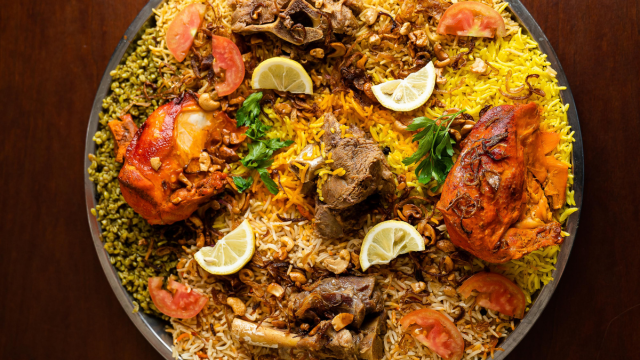
Large pieces of meat can stay cold in their centre even when their surface is hot. Slice or divide them into smaller, evenly sized portions where practical for more consistent reheating.
Can You Reheat Chicken?
Yes. Can you reheat chicken safely? Cooked chicken may be reheated when it was refrigerated promptly and can you reheat food remains within the 48-hour leftover period.
Use an oven, microwave, frying pan or air fryer. Add stock, water, gravy or sauce to lean chicken breast to reduce drying.
Check the thickest section and meat close to bones before serving to ensure the chicken is thoroughly heated.
Can You Reheat Cooked Chicken?
Yes. Can you reheat cooked chicken from the fridge? It can be reheated once until it is steaming hot throughout.
Cooked chicken may alternatively be eaten cold when it was originally cooked thoroughly, cooled within two hours and kept refrigerated.
Can You Reheat Chicken Twice?
No. Can you reheat chicken twice under UK household guidance? The FSA recommends reheating cooked meat only once.
Smaller chicken pieces are preferable because they reheat more evenly than a whole breast, leg or large roast portion.
Can You Reheat Pork?
Yes. Can you reheat pork safely? Properly cooked and refrigerated pork can be reheated once.
Slice thick pork into smaller pieces. Pork in gravy or sauce will usually reheat more evenly than a large dry joint.
The same approach applies to cooked sausages, minced-pork dishes and roast pork.
Foods to Handle with Extra Care
Food Containing Sour Cream
Can you reheat food with sour cream in it? Yes, provided the complete dish was cooked and stored safely.
Use low or moderate heat and stir frequently. Sour cream may split, curdle or develop a grainy appearance when overheated.
That change is usually about texture rather than automatically indicating danger. The meal must still become steaming hot throughout.
For a smoother result, consider reheating the base dish first and adding fresh sour cream afterwards where the recipe permits.
Salmon
Can you reheat salmon? Yes. Cooked salmon may be reheated once when it was refrigerated promptly.
Use moderate oven heat, a covered frying pan or short microwave intervals to reduce drying. The centre must still become thoroughly hot.
Salmon can also be eaten cold while it remains within its safe storage period.
Prawns
Can you reheat prawns? Yes, when the prawns were cooked thoroughly, refrigerated promptly and have not already been reheated.
Prawns in curry or sauce can be reheated on the hob or in a microwave. Breaded prawns generally regain their texture better in an air fryer or oven.
Do not reheat prawns with an uncertain storage history. Babies and young children should be given only thoroughly cooked shellfish.
Scrambled Eggs
Can you reheat scrambled eggs? Yes. Store them promptly and reheat them only once.
Use a saucepan over gentle heat or microwave them in short intervals, stirring frequently.
The eggs may become firmer or rubbery, but they should still be heated until steaming throughout.
Know the Limits
Refrigerated leftovers
Ordinary cooked leftovers should generally be eaten within 48 hours. Rice has a shorter 24-hour limit.
Always follow any shorter storage instruction printed on the packaging.
Defrosting
Frozen leftovers should ideally be defrosted in the fridge. Microwave defrosting is also suitable when the food will be reheated immediately.
Once fully defrosted, use the food within 24 hours. Do not leave it thawing on a worktop, where the outside can warm while the centre remains frozen.
Refreezing
Under cautious UK consumer guidance, food that has been fully defrosted should be used within one day and should not simply be refrozen unchanged.
Plan portions before freezing so that you can defrost only what you need. This also reduces the temptation to cool and reheat the same food repeatedly.
Use-by dates
Do not eat food after its use-by date, even when it looks or smells normal. A use-by date concerns safety, whereas a best-before date generally relates to quality.
Smell and appearance alone cannot prove that leftovers are safe.
Frequently Asked Questions
Can you reheat food?
Yes. Properly cooked, cooled and refrigerated leftovers can generally be reheated once until steaming hot throughout.
Can you reheat food twice?
No. UK household guidance recommends reheating each portion only once.
What temperature should reheated food reach?
It should be steaming hot throughout. Approximately 75°C at the centre is a useful practical thermometer check.
Can reheated food go back into the fridge?
The safest method is to reheat only the portion you intend to eat and discard anything left after reheating.
Can you eat leftovers cold?
Yes, when they were originally cooked thoroughly, cooled and placed in the fridge within two hours, and remain within their safe storage period.

Conclusion
So, can you reheat food? Yes, but only when its entire cooking, cooling and storage history has been safe.
Reheat leftovers until they are piping or steaming hot throughout. Stir microwave-heated food, divide large portions and check the middle rather than relying on a hot surface.
Refrigerate ordinary leftovers within two hours and use them within 48 hours. Cool rice within one hour, eat it within 24 hours and reheat it only once.
Chicken, pork, salmon, prawns, scrambled eggs and dishes containing sour cream can generally be reheated safely once. Use appropriate appliances and containers, and never ignore a “do not reheat” instruction.
The central rule is simple: safe reheating begins long before the appliance is switched on. When food was stored incorrectly, left out overnight or reheated previously, additional heat is not a reliable solution.