

Can you reheat salmon safely without making it dry, rubbery or unpleasantly fishy? Yes. Properly cooked salmon can normally be reheated when it was cooled promptly, stored safely in the fridge and has not already been reheated.
The most important food-safety requirement is to make the salmon steaming hot throughout. When using a clean food thermometer, approximately 75°C in the thickest or coldest part is a useful practical check.
The best reheating method depends on the dish. The oven is normally best for salmon fillets, salmon en croute and larger portions. An air fryer is quick and works well for fishcakes or patties. A covered skillet helps create lightly crisp edges, while a microwave is convenient but requires a low-power, short-interval approach.
You do not always need to reheat cooked salmon. When it was cooked properly, refrigerated within two hours and remains within its safe storage period, it can be eaten cold in salads, sandwiches, wraps and pasta dishes.
Is It Safe to Reheat Cooked Salmon?
Yes, cooked salmon can generally be reheated once.
Before reheating it, confirm that the salmon:
- was cooked thoroughly the first time;
- was refrigerated within two hours;
- has remained properly chilled;
- is no more than 48 hours old;
- has not already been reheated;
- is not beyond any use-by or storage instruction.
The Food Standards Agency advises using ordinary refrigerated leftovers within 48 hours or freezing them when that will not be possible. It also recommends reheating leftovers only once and making them steaming hot throughout.
Discard salmon that was left at room temperature overnight, stored for too long or has an uncertain temperature history. Reheating cannot reliably reverse the effects of unsafe cooling or prolonged storage.
What Temperature Should Reheated Salmon Reach?
Reheated salmon should be steaming hot in the centre.
A food thermometer inserted into the thickest section should read approximately 75°C or above as a practical household benchmark. Avoid touching the baking tray, pan or bone with the probe because this can give a misleading temperature reading.
When reheating a large salmon fillet, salmon Wellington or salmon en croute, check more than one area. The pastry or outside surface can become hot while the salmon inside remains cooler.
The oven or air-fryer setting is different from the salmon’s internal temperature. An oven set at 170°C does not mean the middle of the fish has reached 75°C.
How to Store Leftover Salmon Before Reheating
Allow cooked salmon to cool briefly, then place it in the fridge within two hours.
Store it in a clean, covered container. Where possible, keep sauces, rice, pasta and pastry components separate because they can have different reheating requirements.
Use the salmon within 48 hours. Freeze it promptly when you will not eat it within that period rather than waiting until the end of the second day.
Frozen cooked salmon should preferably be thawed in the fridge. Once fully defrosted, eat it within 24 hours and reheat it only once.
Do not thaw salmon on the kitchen worktop for several hours. The surface can become warm while the centre remains frozen, increasing the food safety risk.
The Oven Method: Best Overall
The oven is usually the best method for reheating salmon because it allows the fish to warm gradually and evenly. It is particularly suitable for:
- whole salmon fillets;
- salmon portions with skin;
- salmon en croute;
- salmon Wellington;
- salmon served in sauce;
- larger family-sized portions.
How to reheat salmon in the oven
- Preheat the oven to approximately 150°C–170°C.
- Place the salmon in an oven-safe dish.
- Add a teaspoon of water, stock, sauce or melted butter to help retain moisture.
- Cover the dish loosely with foil.
- Heat a standard fillet for approximately 10–15 minutes.
- Check the thickest part.
- Add a few more minutes when necessary.
- Serve as soon as the centre is steaming hot.
A lower oven temperature helps the centre warm before the outer flakes become excessively dry. The foil traps some steam, while a little liquid helps reduce moisture loss.
For skin-on salmon, remove the foil during the final few minutes when can you reheat salmon pasta you want to restore some crispness.
Therefore, can you reheat salmon in the oven? Yes. It is the most dependable option for maintaining moisture while heating a thick portion thoroughly.
The Air-Fryer Method: Quick and Easy
An air fryer is useful for salmon portions, fishcakes, patties and pieces that benefit from a lightly crisp exterior.
Set the air fryer to approximately 160°C–170°C. Place the salmon in one layer and avoid overcrowding the basket.
A standard salmon fillet may take approximately five to eight minutes. Turn or check it halfway through, particularly when the portion is thick.
A small amount of oil can help protect the surface, but avoid excessive heat. Air fryers can dry out exposed salmon quickly.
The air fryer is less suitable for loose salmon pasta, creamy sauces or dishes can you reheat salmon pasta containing a large quantity of liquid unless they are placed in a suitable heat-resistant container approved for the appliance.
The Skillet Method: Best for Crisp Edges

A skillet or frying pan can reheat salmon while restoring lightly browned edges.
Place the salmon in a non-stick or lightly oiled pan over low-to-medium heat. Add a teaspoon of water beside the salmon and cover the pan with a lid.
The trapped steam warms the centre while the pan reheats the underside. After several minutes, remove the lid and briefly crisp the surface if desired.
Turn the salmon carefully because reheated fish can flake and break apart easily.
This method works particularly well for:
- skin-on fillets;
- salmon patties;
- fishcakes;
- smaller pieces of cooked salmon.
On the Stovetop: Fast and Moist
A saucepan on the hob is best for salmon in curry, cream sauce, tomato sauce or another liquid-based dish.
Transfer the dish to a saucepan and use low-to-medium heat. Add a little water, stock, milk or sauce if it has thickened in the fridge.
Stir the sauce frequently and turn the salmon pieces gently so that they heat evenly without breaking apart.
Do not stop when the sauce first bubbles. Check that the salmon inside the sauce is also steaming hot throughout.
For plain salmon, gentle poaching can work. Place the fish in a pan with a small quantity of stock or water, cover it and warm it over low heat.
The Microwave Method: Quickest, but Use Caution
Can you reheat salmon in the microwave? Yes. A microwave is safe when used correctly, but it is easier to dry out the fish or create uneven hot and cold spots.
Place the salmon in a microwave-safe dish. Add a teaspoon of water, stock, sauce or butter and cover it loosely with a vented microwave-safe lid.
Use a medium or reduced power level rather than maximum power. Heat for approximately 30 seconds, check the fish and continue in 20-to-30-second intervals.
Turn or rearrange the salmon between intervals. Allow it to stand briefly after heating so the temperature can distribute more evenly.
The exact time depends on the microwave wattage and the thickness of the portion. Continue until the centre is steaming hot.
Why You May Prefer to Avoid the Microwave
The microwave is not automatically unsafe for salmon. The main disadvantages concern texture, odour and uneven heating.
Microwaves can:
- dry the outer flakes before the centre warms;
- intensify the fish aroma;
- soften crisp skin or pastry;
- create hot edges and a cooler centre;
- make previously delicate salmon rubbery.
The FSA notes that microwaved leftovers may become very hot at the edges while staying cold in the centre. Turning or rearranging the food and observing standing time can reduce this problem.
The oven is therefore better for thick fillets and pastry-covered salmon, while the air fryer or skillet is usually better for crisp textures and browned edges.
Can You Reheat Salmon and Rice?
Yes, can you reheat salmon and rice together? You can when both ingredients were cooled promptly, stored safely and have not already been reheated.
The rice determines the shorter storage period. Cooked rice should generally be cooled within one hour, refrigerated promptly and used within 24 hours.
To reheat salmon and rice:
- Place them in a microwave-safe or oven-safe dish.
- Add a little water to the rice.
- Cover the dish to trap steam.
- Stir or rearrange the rice halfway through.
- Avoid breaking up the salmon unnecessarily.
- Check that both components are steaming hot.
Do not reheat the meal when the rice has already been reheated or its storage history is unclear. Rice may contain bacterial spores that survive cooking and can produce heat-resistant toxins during unsafe storage.
Can You Reheat Salmon Pasta?
Yes, can you reheat salmon pasta safely? Properly stored salmon pasta can normally be reheated once.
Creamy salmon pasta is best reheated on the hob over low heat. Add a splash of milk, cream, stock or water and stir gently.
Avoid vigorous stirring, which can break the salmon into very small pieces. Continue until the pasta, sauce and fish are thoroughly steaming hot.
Tomato-based salmon pasta can also be reheated in a covered saucepan or oven-safe dish.
Use the meal within 48 hours and do not cool and reheat it repeatedly.
Can You Reheat Salmon Pasta in the Microwave?
Yes, can you reheat salmon pasta in the microwave? It can be reheated safely when stored correctly.
Place one portion in a microwave-safe bowl and add a small can you reheat salmon pasta amount of water, milk or sauce. Cover the bowl loosely.
Microwave at a medium setting in short intervals. Stir the pasta halfway through, but handle the salmon gently.
Allow the dish to stand briefly, stir again and check that the centre is steaming hot.
Creamy sauces may separate slightly during reheating. This is primarily a texture issue rather than proof that the dish is unsafe.
Can You Reheat Salmon en Croute?
Yes, can you reheat salmon en croute without making the pastry soggy? The oven is the best choice.
Preheat the oven to approximately 160°C–170°C. Place the salmon en croute on a baking tray and cover it loosely with foil.
Heat an individual portion for approximately 15–20 minutes. A larger piece may need considerably longer.
Remove the foil during the final five minutes to restore the pastry’s crispness.
Check the salmon at the centre before serving. Pastry can become hot and browned while the fish inside remains cooler.
Avoid the microwave because it is likely to soften the pastry and may heat the filling unevenly.
Can You Reheat Salmon Wellington?
Yes, can you reheat salmon Wellington safely? Treat it in the same way as salmon en croute.
Use an oven at approximately 160°C–170°C and cover the pastry loosely during most of the reheating period.
A slice may need around 15–20 minutes, while a large remaining section may require longer. Uncover it near the end to crisp the pastry.
Use a thermometer or carefully check the centre because salmon Wellington can be dense, particularly when it contains spinach, cream cheese or another filling.
Reheat only once.
Can You Reheat Salmon Patties?
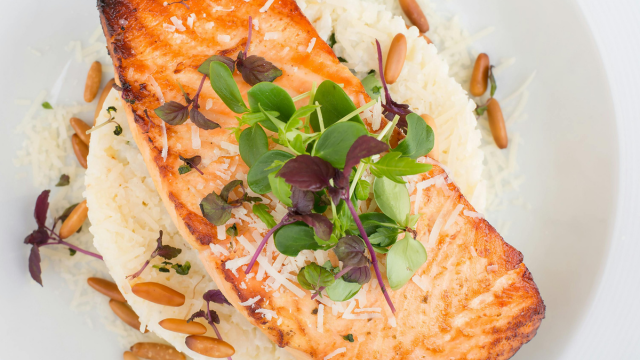
Yes, can you reheat salmon patties? They reheat particularly well in an air fryer, skillet or oven.
Air fryer
Use approximately 170°C for four to seven minutes, turning halfway through.
Skillet
Heat over low-to-medium heat with a small amount of oil. Turn can you reheat salmon pasta carefully and cover the pan briefly when the patties are thick.
Oven
Use approximately 170°C for 10–15 minutes.
Check the centre before eating. A browned exterior does not prove that a thick patty is hot internally.
Can You Reheat Salmon Fishcakes?
Yes, can you reheat salmon fishcakes? Properly stored fishcakes can be reheated once.
An air fryer or oven usually provides the best texture.
Place them in one layer and heat at approximately 170°C. Small fishcakes may need six to ten minutes in an air fryer or 12–18 minutes in an oven.
Turn them halfway through and check the centre because the can you reheat salmon pasta breadcrumb coating may become hot before the salmon-and-potato filling.
Microwaving is possible, but the coating will normally become softer.
Can You Reheat Salmon the Next Day?
Yes, can you reheat salmon the next day? Salmon refrigerated within two hours can generally be reheated the following day.
It must have remained properly chilled and must not already have been reheated.
Use it within the broader 48-hour leftover period. However, when it is combined with rice, apply the stricter 24-hour rice limit.
Salmon can also be eaten cold the next day if it was cooked and refrigerated correctly.
Can You Reheat Salmon Twice?
No. Can you reheat salmon twice under UK household guidance? The Food Standards Agency advises reheating leftovers only once.
Each heating, cooling and refrigeration cycle creates another opportunity for bacterial growth or contamination.
Store salmon in individual portions. Remove one cold serving and leave the rest in the fridge or freezer.
Do not reheat a large fillet, eat part of it, refrigerate the remainder and plan to reheat it again.
Changing the appliance does not reset the reheating count. Salmon microwaved and then refrigerated before being placed in an oven has undergone repeated reheating.
Mistakes to Avoid When Reheating Salmon
Using excessive heat
High temperatures can dry the salmon’s surface before the centre warms.
Reheating for too long
Check frequently and stop when the fish is thoroughly hot. Extra time does not improve safety after the safe temperature has been reached.
Leaving the salmon uncovered
Covering plain salmon during most of the reheating process helps retain moisture and prevent excessive drying.
Failing to check the centre
Thick salmon, fishcakes and pastry dishes can remain cooler internally.
Reheating the whole batch
Take one portion while the salmon is still cold and leave the remainder refrigerated.
Ignoring accompanying ingredients
Rice has a 24-hour refrigerated limit. Cream sauces, pasta and pastry also need prompt cooling and safe storage.
Using the microwave at maximum power
Short intervals at a moderate setting give greater control and reduce drying.
Relying only on smell
An unusual smell is a reason to discard salmon, but the absence of an unpleasant smell does not prove that it was stored safely.
Signs Leftover Salmon Should Be Discarded
Throw the salmon away when:
- it was left at room temperature for more than approximately two hours;
- it remained out overnight;
- it has been refrigerated for longer than 48 hours;
- it has already been reheated;
- its storage history is uncertain;
- it is past its use-by date;
- it has visible mould or unusual discolouration;
- its container has leaked or become damaged.
Do not taste questionable salmon to decide whether it is safe.
Try It Cold: Skip Reheating Altogether
Safely cooked and refrigerated salmon does not need to be reheated.
Cold leftover salmon works well in:
- leafy salads;
- pasta salads;
- sandwiches;
- wraps;
- grain bowls;
- potato salads;
- omelette fillings;
- cold noodle dishes.
Flake the cold salmon gently and combine it with freshly prepared ingredients.
Eating it cold can preserve moisture and prevent the stronger aroma that sometimes develops during reheating. The safety requirements remain the same: it must have been cooked correctly, refrigerated within two hours and used within 48 hours.
Cold-smoked salmon is a different ready-to-eat product rather than an ordinary cooked leftover. Pregnant people and those with weakened immune systems are advised to avoid cold-smoked or cured fish unless it is cooked until steaming hot because of the risk from listeriosis.
Frequently Asked Questions
Can you reheat salmon?
Yes. Reheat safely stored cooked salmon once until it is steaming hot throughout.
What is the best method for reheating salmon?
The oven is normally best for retaining moisture and heating a thick fillet evenly.
Can you reheat salmon in the microwave?
Yes. Use medium power, add moisture, cover the fish and heat in short intervals.
Can you reheat salmon in an air fryer?
Yes. Use approximately 160°C–170°C and check it frequently to prevent drying.
How long can cooked salmon stay in the fridge?
Use cooked salmon within 48 hours or freeze it sooner.
Can you eat leftover salmon cold?
Yes, when it was cooked properly, refrigerated within two hours and remains within the 48-hour storage period.
Can you reheat frozen cooked salmon?
Yes. Defrost it safely in the fridge and reheat it once until steaming hot.
How do you keep reheated salmon moist?
Use moderate heat, add a little water, stock, sauce or butter and cover the salmon during most of the reheating process.

Conclusion
So, can you reheat salmon safely? Yes, provided it was cooked properly, refrigerated within two hours, stored for no longer than 48 hours and has not already been reheated.
The oven is the best overall method for fillets, salmon en croute and salmon Wellington. An air fryer works well for patties and fishcakes, while a covered skillet can restore crisp edges. The microwave is convenient, but medium power and short intervals are essential to prevent dry, unevenly heated fish.
Check the thickest part and make sure it is steaming hot throughout. Approximately 75°C is a useful thermometer benchmark.
Apply the stricter 24-hour rule when salmon is served with rice, and reheat salmon pasta gently with additional moisture. Reheat each portion only once.
When texture matters most, consider eating properly stored leftover salmon cold. It can be just as enjoyable in salads, sandwiches and wraps without risking the dryness that sometimes comes from reheating.