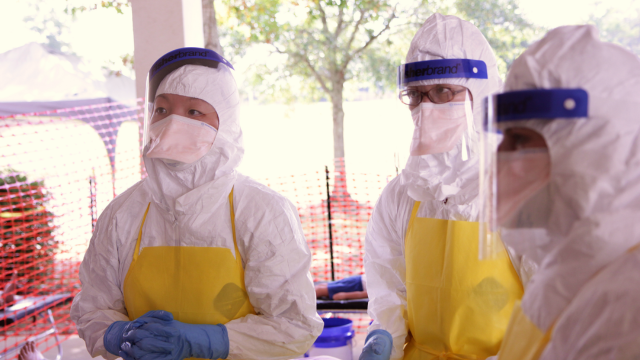

Every employee needs enough information, instruction and training to carry out their work without unnecessary risk to themselves or other people. That makes health and safety training courses UK employers provide or workers undertake an important part of effective workplace safety management.
The right training depends on the job. An office employee may need basic awareness, display-screen and emergency information, while someone operating machinery, handling hazardous substances or working at height may require far more specific instruction, supervised practice and evidence of competence. Managers and people responsible for risk assessments may need another level of training again.
This distinction matters because completing an online safety course does not automatically prove that someone is competent for every workplace task. Training should match the hazards, responsibilities and working conditions involved.
This guide explains the main types of employee health-and-safety learning, essential safety skills, recognised development routes, practical risk assessment principles and how organisations can use compliance training as part of a wider system for safer work.
What Are Health and Safety Training Courses and Why Are They Important?
Health and safety training courses teach workers how to recognise hazards, understand workplace precautions and carry out their duties safely.
Training can be broad or highly specific.
General awareness training may introduce employees to concepts such as hazards, risks, reporting procedures, emergency arrangements and personal responsibilities. Task-specific training could cover manual handling, hazardous substances, machinery, work at height, first aid or another particular risk.
The level required should be proportionate to the job.
An employee who spends most of the day carrying out ordinary office administration does not normally need the same training as somebody operating industrial machinery. Equally, a short general health-and-safety course would not usually be enough to establish practical competence for a specialised high-risk activity.
Health and safety training is part of an employer’s responsibilities
In Great Britain, employers have duties under the Health and Safety at Work etc. Act 1974 and associated regulations to protect employees and others affected by their work. Training forms part of these health and safety arrangements.
HSE guidance explains that employees need information about the hazards and risks they may face, precautions they should take and relevant emergency procedures. Training is particularly significant when people:
- start a new job;
- encounter new or increased risks;
- use work equipment;
- take on unfamiliar responsibilities; or
- need refreshed knowledge because circumstances have changed.
Specific legislation can create more detailed requirements for particular hazards and activities. This means compliance training should not be treated as a generic annual video that every worker watches regardless of their job. Employers first need to identify what their workers actually need to know and be able to do.
Training does not replace risk control
Training is an important safety control measure, but it should not be used as a substitute for eliminating or reducing hazards where better controls are reasonably practicable.
Suppose employees are repeatedly exposed to a dangerous moving part of a machine. Telling them to “be careful” is not an adequate alternative to properly guarding the machinery where guarding is required.
Similarly, providing PPE and training employees to wear it should not automatically become the first response if the hazard can reasonably be eliminated or controlled more effectively through engineering or organisational measures. Good workplace safety therefore combines competent people with appropriate systems, equipment, supervision and physical controls.
Why Health and Safety Skills Are Important in UK Workplaces
Health and safety is relevant to every workplace, although the workplace hazards and safety risks differ considerably.
An office may need to manage slips, display-screen work, electrical equipment, fire arrangements and work-related stress. A warehouse may also face vehicle movements, lifting, machinery and storage risks. Construction, manufacturing, healthcare and laboratory environments introduce further hazards.
Employees need sufficient health and safety awareness to recognise what could cause harm and follow the controls established for their work.
Workers often see hazards first
Employees carry out day-to-day tasks and can notice problems that managers may not immediately see.
A worker may spot a damaged guard, blocked emergency exit, recurring spill, unsafe lifting practice or change in a process. Training should therefore help employees understand how to report concerns rather than teaching them simply to follow instructions without question.
Effective workplace safety systems depend on information moving in both directions.
Employees need to understand the difference between a hazard and a risk
These terms are related but different.
A hazard is something with the potential to cause harm. A risk considers the likelihood and possible severity of that harm occurring.
For example, a hazardous cleaning chemical may have the potential to injure skin or eyes. The level of risk depends on matters such as concentration, exposure, how it is handled and the controls in place.
Understanding this distinction helps workers engage more meaningfully with risk management and safety controls.
Safety competence matters during change
New equipment, new chemicals, revised work processes or different responsibilities can introduce risks that previous training did not address.
Training therefore should not always be regarded as a one-time induction exercise. Employers need to consider refresher or additional safety training where necessary, particularly when:
- working practices change;
- new equipment is introduced;
- workers take on new duties;
- accidents or near misses reveal a gap;
- employees have not used a skill for some time; or
- previous training has not produced the required behaviour.
HSE guidance specifically warns organisations not to assume that someone is competent merely because they have received instruction or attended a course.
Essential Health and Safety Skills Employees Should Learn
The exact skill set depends on the workplace, but several areas are widely useful for developing occupational health and safety awareness.
Hazard recognition
Employees should be able to recognise hazards relevant to their own work.
Depending on the setting, this could include:
- slips and trips;
- manual handling;
- machinery;
- electricity;
- vehicles;
- work at height;
- hazardous substances;
- fire;
- noise;
- biological hazards; or
- poor workplace organisation.
Employees do not need to become professional safety advisers simply to recognise that something may be unsafe. They do need to know what action to take once they notice it.
Risk awareness
Employees should understand why controls exist and what could happen if those controls fail. This is more useful than simply memorising instructions.
A worker who understands why a machine must be isolated before maintenance is more likely to recognise an unfamiliar situation in which the same safe working principle applies.
Safe use of equipment
Workers who use work equipment need appropriate training for that equipment and its risks.
Depending on the task, this may require practical instruction and supervision rather than online theory alone. Employees should understand safe operating procedures, limitations, emergency arrangements and what to do if equipment appears defective.
Manual-handling awareness
Poor lifting and handling can contribute to injury, but training should not reduce manual-handling control to instructions about the “correct way to lift”.
Employers should first consider whether hazardous manual handling can be avoided or reduced. Where handling remains necessary, training can help employees understand the load, environment, available equipment and safer handling techniques.
Emergency response
Workers need to know what to do when something goes wrong. This can include:
- how to raise an alarm;
- evacuation procedures;
- assembly arrangements;
- who to contact;
- where first-aid support is available; and
- how to report an accident or dangerous situation.
Specialist emergency duties may require additional emergency response training.
Reporting and communication
Employees should know how to report hazards, near misses, incidents and defective controls.
An organisation cannot investigate a problem it never hears about. Good training therefore encourages safety reporting and communication without creating the impression that workers will automatically be blamed whenever something goes wrong.
Best Health and Safety Training Courses in the UK
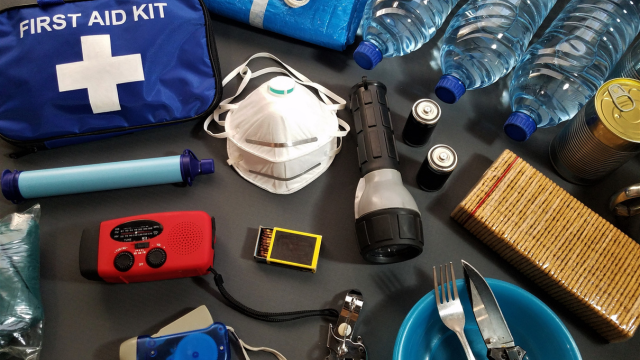
The best course depends on the employee’s responsibilities and the hazards they face.
| Training route | Particularly suitable for | Main purpose |
| Training Arena workplace health-and-safety course | Employees and beginners seeking broad awareness | Introductory coverage of common workplace hazards |
| IOSH Working Safely | Employees across sectors | Structured workplace safety and health awareness |
| IOSH Managing Safely | Managers and supervisors | Managing risks and day-to-day safety responsibilities |
| NEBOSH Health and Safety at Work Award | Learners wanting a foundation-level qualification | Fundamental hazard and risk-management learning |
| NEBOSH National General Certificate | Managers, supervisors and aspiring safety professionals | Broader assessed occupational health-and-safety study |
| Specialist task training | Employees exposed to defined hazards | Role- and hazard-specific competence |
Training Arena Health and Safety in the Workplace
Training Arena currently provides health and safety training courses UK in the Workplace Fundamentals and Overview. The programme is listed as approximately 20 hours and includes modules covering health-and-safety management, engineering safety, fire and electrical safety, PPE, work at height, work equipment, chemical and biological hazards, manual handling, occupational disease and incident reporting.
It can therefore provide broad introductory learning for someone wanting to develop general workplace health and safety knowledge.
The course is currently listed as “All Levels” and provides a certificate of completion. That certificate should be understood according to what it actually demonstrates: completion of the programme.
It should not automatically be treated as:
- a regulated health-and-safety qualification;
- IOSH or NEBOSH certification;
- a professional licence;
- proof that someone can undertake specialist safety work independently; or
- evidence of practical competence for machinery or another safety-critical task.
Training Arena can therefore be one learning option, but employers still need to determine whether employees require workplace-specific instruction, supervision or additional recognised safety qualifications or training.
IOSH Working Safely
IOSH Working Safely is specifically designed for employees and does not require previous safety experience.
Current course content includes understanding why safety matters, recognising hazards and risks, identifying common workplace hazards and contributing to better safety performance.
Because IOSH designs and quality-assures the programme, it offers a recognised route for workers who want structured health and safety awareness training.
IOSH Managing Safely
Managers have different responsibilities from ordinary employees.
IOSH Managing Safely is designed for managers and supervisors and covers areas including assessing and controlling risks, incident investigation and safety performance. It can therefore be more suitable where someone manages people or operational activity.
NEBOSH courses
NEBOSH provides several health-and-safety qualifications at different levels.
Its refreshed Health and Safety at Work Award is a foundation programme covering common hazards, risk assessment and practical workplace improvements.
The National General Certificate in Occupational Health and Safety is a substantially deeper route aimed at managers, supervisors and people with health-and-safety responsibilities.
The General Certificate was revised for 2026, with the updated syllabus entering teaching from February. Someone seeking a health and safety career should therefore distinguish these qualifications from short awareness courses.
Health and Safety Certifications and Professional Development
The phrase safety certification can refer to very different achievements.
Certificate of completion
A private training provider may issue a certificate confirming that a learner has completed its course. That can be useful for a training record and CV.
However, it does not automatically prove that the learner has passed a regulated qualification or demonstrated practical competence.
Recognised training certificate
Programmes such as IOSH Working Safely and Managing Safely are designed and quality-assured by a recognised professional body.
IOSH also allows genuine course certificates to be verified. This gives the certificate a different basis from an ordinary provider-created completion certificate.
Formal health-and-safety qualifications
NEBOSH qualifications involve defined syllabuses and assessments and are widely used by professionals developing occupational health and safety careers.
The National General Certificate, for example, includes a practical risk-assessment component under its current specification. This level of assessed study is not equivalent to completing a short awareness programme.
Occupational competence
Some activities require practical skill, experience, supervision or recognised task-specific training.
A worker may understand the theory of operating equipment but still be unsafe to use it independently. HSE’s approach is clear: employers should not assume that attendance on a course automatically creates competence.
Competence normally combines suitable skills, knowledge, training and experience for the work involved.
Health and Safety Tools, Procedures, and Workplace Practices
Good training should help workers understand the safety systems, procedures and controls they actually encounter at work.
Risk assessment
A risk assessment is a structured process for identifying hazards and deciding how risks will be controlled.
HSE’s basic approach involves:
- identifying hazards;
- assessing the risks;
- controlling the risks;
- recording significant findings where required; and
- reviewing the controls.
Employers with five or more employees must record significant findings.
The purpose is not paperwork for its own sake. HSE specifically warns businesses not simply to copy an example assessment and insert the company name. The assessment has to reflect the real workplace and its actual health and safety training courses UK risks.
The hierarchy of controls
Effective safety management normally prioritises stronger controls over reliance on individual behaviour.
A simplified approach is to consider whether the hazard can be:
- eliminated;
- replaced with something safer;
- controlled through engineering measures;
- managed through safe systems and organisational controls; and
- addressed with appropriate PPE where necessary.
Not every situation fits neatly into a simplified hierarchy, but the principle is useful: PPE and warnings should not automatically replace better hazard controls and risk-reduction measures.
Safe systems of work
A safe system of work sets out how a task should be undertaken safely.
Employees need to understand the procedure rather than merely sign a document stating that they have read it.
For complicated or hazardous activities, practical demonstration and supervision can be essential.
Inspections and reporting
Regular inspections can identify deteriorating equipment, blocked access, damaged controls and changing conditions.
Employees should also have an easy way to report hazards between inspections.
Near-miss learning
A near miss is an event that could have caused harm but did not on that occasion.
Ignoring near misses loses an opportunity to identify weak controls before someone is injured.
Organisations should therefore encourage appropriate reporting and investigation.
Benefits of Health and Safety Training for Employees and Employers
Training can create benefits for both workers and organisations when it is relevant and properly applied.
Better hazard awareness
Employees who understand workplace hazards are better equipped to recognise changing conditions and follow appropriate controls.
Greater confidence
Training can reduce uncertainty about what to do during ordinary work and emergencies.
This is particularly important for new workers who may otherwise imitate unsafe habits because they do not know the correct process.
More effective reporting
Workers who understand what constitutes a hazard, incident or near miss may report concerns earlier.
That gives employers an opportunity to investigate and correct problems.
Support for legal compliance
Relevant compliance training can help employers meet their legal responsibilities, but training records alone do not demonstrate complete compliance.
Employers still need suitable risk assessments, safe equipment, supervision, maintenance, consultation and other controls applicable to the work.
More consistent workplace practices
When employees receive clear training linked to workplace procedures, expectations become easier to understand.
That can reduce variation between teams and shifts.
Career development
Health-and-safety knowledge can also support professional development.
Supervisors may use recognised training to strengthen their management capability, while people interested in occupational health and safety training courses UK can progress towards more substantial qualifications.
A course cannot guarantee promotion or employment, but relevant learning can strengthen a candidate’s evidence of development.
How to Build a Safer and More Compliant Workplace Through Training

Successful training starts with workplace risk rather than a catalogue of courses.
health and safety training courses UK Identify training needs
Employers should examine job roles, risk assessments, equipment, employee experience and legal requirements.
Ask what each group of workers needs to know and what they must be able to demonstrate.
Match training to responsibility
Employees, supervisors and specialist safety staff do not need identical programmes.
An ordinary employee may need awareness and task training. A manager may need stronger understanding of risk management and incident investigation. A professional safety adviser may need substantial formal qualifications and experience.
Make training specific to the workplace
Generic courses can teach important principles, but employees also need information about their own environment.
That can include:
- emergency exits;
- local reporting arrangements;
- specific machinery;
- particular substances;
- site traffic;
- control measures; and
- people responsible for safety.
Check learning rather than attendance
A signature on an attendance sheet shows that someone was present.
It does not necessarily show that they understood the training.
Employers should use suitable methods to confirm learning. For practical skills, this may require demonstration or supervised observation.
Provide refresher training where necessary
Knowledge can fade, and working conditions change.
Refresher learning may be appropriate when employees have not used skills for some time, procedures change or incidents reveal weaknesses.
Encourage worker involvement
Workers can provide valuable information about real risks.
Consulting them when designing training can make learning more relevant and expose hazards that are less visible to management.
Future Trends in Workplace Health and Safety Training
Health-and-safety education is becoming increasingly connected with digital technology, data and changing patterns of work.
More digital and blended learning
Online training provides flexibility and can work well for knowledge-based subjects.
However, practical activities still require appropriate practical instruction and assessment.
Future programmes are likely to combine online theory with workshops, simulations and workplace evidence rather than assuming every skill can be developed through e-learning alone.
Virtual and simulated environments
Simulations can allow workers to practise decision-making without exposure to real hazards.
This can be particularly useful for emergency scenarios or situations that are difficult to recreate safely.
Data-informed safety management
Digital reporting systems can help organisations identify recurring hazards and trends across incidents and near misses.
Employees may therefore need stronger digital skills alongside traditional safety knowledge.
Changing risks from technology
Automation, robotics, AI-enabled systems and new forms of equipment can alter workplace hazards.
Training needs to evolve with the work rather than continuing to focus only on established risks.
Greater attention to occupational health
Workplace safety is not limited to sudden accidents.
Organisations increasingly need to consider work-related ill health, including exposure, musculoskeletal risks and psychosocial hazards.
Training should therefore address health as well as visible physical danger.
More emphasis on competence
The direction of good safety management remains clear: completing training is not enough by itself.
Employers need to know whether people can actually perform their roles safely.
That makes observation, feedback, refresher learning and workplace safety supervision increasingly important alongside formal course certificates.
Key Takeaways
Effective health-and-safety training should be based on the hazards people actually encounter and the responsibilities they hold.
Employers have legal duties to provide appropriate information, instruction, training and supervision. A generic online course may contribute to that process, but it cannot automatically replace workplace-specific training or practical competence assessment.
Training Arena’s health and safety training courses UK in the workplace safety Fundamentals and Overview can provide broad introductory learning covering common hazards and safety principles. Its current award is a certificate of completion and should not be confused with IOSH or NEBOSH credentials.
Employees seeking general recognised awareness may consider IOSH Working Safely, while managers may find IOSH Managing Safely more appropriate. People progressing towards occupational health-and-safety careers can investigate more substantial NEBOSH qualifications.
Above all, workplace safety improves when training is connected with effective risk assessment, sensible controls, worker consultation and supervision.
FAQ
What are health and safety training courses?
health and safety training courses UK training courses teach employees how to recognise hazards, understand risks, follow safety procedures and respond appropriately to incidents or emergencies. Courses range from basic awareness programmes to specialist practical training and formal occupational health-and-safety qualifications.
Why is health and safety training important for employees?
Training helps workers understand the hazards connected with their jobs and the precautions required to protect themselves and others. It also helps employers fulfil legal duties to provide suitable information, instruction, training and supervision. Training should be proportionate to the risks and responsibilities involved.
Which health and safety course is best in the UK?
There is no single best course. Training Arena may suit learners wanting broad introductory online learning. IOSH Working Safely is designed for employees, while IOSH Managing Safely targets managers and supervisors. NEBOSH qualifications may be more appropriate for people with substantial safety responsibilities or those developing occupational health-and-safety careers.
What skills are covered in health and safety training?
Depending on the programme, subjects can include hazard recognition, risk assessment, incident reporting, fire safety, manual handling, PPE, work equipment, hazardous substances, emergency procedures and safe working practices. Specialist jobs require training specific to their actual hazards and equipment.
Who should take health and safety training courses?
All workers need appropriate health-and-safety information and training, although not everyone needs the same course. Employees, new starters, supervisors, managers and specialist safety professionals need learning matched to their responsibilities and workplace safety risks.
Are health and safety qualifications valuable in the UK?
Recognised qualifications can be useful for supervisors, managers and people developing careers in occupational safety. Their value depends on the role and qualification. A completion certificate, IOSH course and NEBOSH qualification represent different types and depths of learning, so candidates should describe them accurately.
How can health and safety training benefit employers?
Relevant training can improve hazard awareness, strengthen reporting, support consistent safe working practices and help employers meet legal duties. It is most effective when combined with appropriate controls, supervision, consultation, maintenance and regular review rather than being treated as a standalone compliance exercise.
Can health and safety training improve workplace safety and career opportunities?
Training can support safer behaviour and professional development when employees apply what they learn. Recognised qualifications may also strengthen applications for particular supervisory or safety roles. However, training does not guarantee employment or eliminate workplace safety risk, and a certificate alone does not prove competence for safety-critical work.

Conclusion
Effective health and safety training courses UK employers and employees choose should reflect real workplace safety risks rather than simply satisfy a checklist. Every worker needs appropriate information and instruction, but the depth of training required varies according to the job, equipment, environment and level of responsibility.
Training Arena offers broad introductory learning covering many common health-and-safety subjects and can support general awareness. Its certificate should be presented accurately as a completion certificate rather than a substitute for recognised occupational qualifications, task-specific competence or professional safety certification.
Employees seeking broader recognised training can consider routes such as IOSH Working Safely, while managers may benefit from IOSH Managing Safely. People developing health-and-safety careers may require more substantial NEBOSH study and practical experience.
Ultimately, health and safety training courses UK effective workplace safety comes from combining relevant training with competent supervision, sensible risk assessment, appropriate controls and meaningful worker involvement. Compliance training is most valuable when employees can use what they have learned in real working conditions and organisations continue checking whether their safety arrangements actually work.