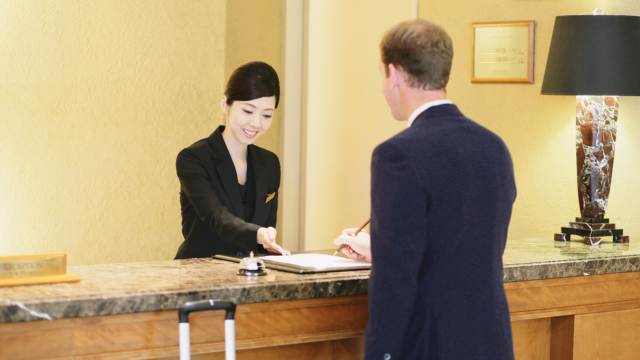

Receptionists are often the first people visitors, customers or patients speak to when contacting an organisation. That makes the role much more important than simply answering a telephone or directing somebody to a meeting room.
Modern reception work can involve appointment systems, visitor security, email, customer enquiries, payments, digital records and communication with several departments. For people considering this career, receptionist courses UK learners can choose range from short online programmes to college courses, customer-service apprenticeships and broader administration training.
Good front desk training should develop practical customer service skills, communication, organisation and digital confidence. Those abilities can support applications for office receptionist jobs as well as progression into wider admin careers.
There is no single compulsory qualification required for every UK receptionist role. Employers often look instead at communication, reliability, IT ability and relevant experience. This guide explains the main training routes, career opportunities and skills needed to build a strong foundation in reception work.
What Are Receptionist Courses and Why Are They Important?
Receptionist courses teach the knowledge and practical skills used to manage a reception or front-desk environment.
An introductory programme might cover greeting visitors, answering calls, telephone etiquette, handling messages, appointment booking and basic customer service.
More substantial training may include email communication, records management, office software, dealing with complaints, data protection, payments, meeting-room coordination and administrative support.
The exact content should reflect the intended workplace.
A receptionist in a hotel may need booking and guest-service skills. Someone working in a GP practice may need confidence handling appointments, confidential information and patients who may be distressed. A corporate receptionist may deal more heavily with visitor management, meeting rooms and professional communication.
This is why generic reception training has limits.
The basic principles transfer, but competence also depends on understanding the organisation and its customers.
Reception work is broader than greeting visitors
Meeting and welcoming people is central to the role, but receptionists may also:
- answer telephone and online enquiries;
- maintain booking systems;
- manage visitor sign-in procedures;
- issue passes;
- organise meeting rooms;
- process incoming post;
- take payments;
- update databases;
- support administrative teams.
This combination makes reception a useful entry point into broader office work.
Someone who becomes confident with diaries, records and professional correspondence may later progress towards administration, executive support or office management.
Training should include practical application
Reception is a customer-facing occupation.
A learner may understand the theory of good communication without being able to deal calmly with a frustrated visitor.
Effective training should therefore include realistic scenarios.
For example, how should a receptionist respond when a customer demands to see a manager who is unavailable? What happens if two visitors arrive at once while the telephone is ringing? How should confidential information be handled when other people can hear the conversation?
These situations develop judgement rather than simple recall.
Why Receptionist Skills Are Important for Career Development in the UK
Receptionists influence how people experience an organisation.
For many visitors, the front desk forms the first impression of the business.
A professional welcome can create confidence. Poor communication, long delays or a dismissive attitude can create frustration before the visitor has even spoken to the person they came to see.
That makes reception both a customer-service and organisational role.
Reception skills are transferable
The National Careers Service identifies customer service, communication, administration, teamwork and IT competence among the capabilities needed for reception work.
These are also useful across many other occupations.
Someone who develops strong customer service skills as a receptionist can later move into sales support, customer operations, hospitality or service administration.
Experience organising appointments and records can support administrative progression.
This is one reason receptionist work can be a useful foundation for broader admin careers.
Receptionists help organisations function efficiently
A receptionist often manages interruptions that would otherwise fall to other employees.
They answer basic questions, direct visitors, take messages and maintain appointments.
This allows specialist colleagues to concentrate on their own roles.
Good reception work therefore requires an understanding of who does what within the organisation.
A receptionist who knows where enquiries belong can solve or redirect them quickly.
Customer-facing confidence matters
Many people entering office work have adequate computer skills but limited experience speaking with unfamiliar customers.
Reception provides regular practice in professional communication.
The employee learns to adjust their tone, ask concise questions and deal with people who may be impatient, confused or anxious.
These abilities remain useful even if the person later leaves reception work.
Essential Receptionist Skills and Qualifications
There is no single mandatory receptionist qualification, but several skills are consistently important.
Verbal communication
Receptionists need to speak clearly and professionally.
They should be able to understand what the visitor needs without making them explain the same situation repeatedly.
Tone matters.
An efficient answer can still sound rude if delivered abruptly.
Good communication combines clarity with courtesy.
Listening
Reception work involves gathering information quickly.
A visitor may provide a name, appointment time and reason for attending in one sentence.
The receptionist needs to identify what matters and ask further questions only where necessary.
Listening is especially important when people are upset.
Interrupting too quickly can escalate a complaint.
Customer service skills
Strong customer service skills help receptionists manage enquiries, problems and expectations.
This includes recognising what can be resolved immediately and what needs referral.
A receptionist should not promise something simply because a customer wants it.
Professional service includes explaining limitations honestly.
Organisation
Front desks can become busy quickly.
A receptionist may need to manage visitors, calls, emails and appointments simultaneously.
Organisation helps prevent important tasks from being lost among interruptions.
Digital calendars, task systems and structured message-taking can all help.
IT skills
Modern receptionists typically use computers throughout the day.
Common systems include:
email, calendars, booking platforms, customer databases, spreadsheets, payment systems and visitor-management software.
The exact application matters less initially than general digital confidence.
Someone who understands how to manage records and navigate software can adapt more easily to a new employer’s system.
Attention to detail
Small mistakes can create significant disruption.
Recording the wrong telephone number may prevent an employee returning a call. Booking an appointment on the wrong date can inconvenience a customer and create pressure elsewhere.
Receptionists need to check information carefully.
Confidentiality
Receptionists may see information that other visitors should not see or hear.
A medical receptionist, for example, handles especially sensitive personal information.
Even an ordinary office receptionist may maintain visitor details and employee contact information.
Good practice means collecting and sharing only the information genuinely required and following the employer’s privacy procedures.
Remaining calm
Front desks can involve pressure.
Visitors may arrive late, meetings may change and telephones may ring continuously.
A receptionist needs to stay professional without appearing indifferent.
This ability develops through experience as much as through theory.
Best Receptionist Courses in the UK

There is no universal best programme among receptionist courses UK learners can choose.
The correct option depends on the intended workplace and current experience.
| Training route | Suitable for | What to check |
| Short online receptionist course | Beginners exploring reception work | Practical content, assessment and certificate status |
| Customer service training | Receptionists in strongly customer-facing roles | Complaint handling and communication practice |
| Business administration course | Learners targeting office-based progression | IT, records, communication and qualification level |
| Level 2 Customer Service Practitioner apprenticeship | Eligible employees in England | Employer role, assessment and current apprenticeship version |
| Hospitality/front-of-house course | Hotel and leisure reception roles | Reservations, guest service and industry relevance |
| Medical reception training | People targeting GP or healthcare reception | Confidentiality, terminology and workplace procedures |
General receptionist courses
A general course should ideally cover telephone technique, visitor management, communication, diaries and basic administration.
These can provide useful preparation for somebody applying for their first office role.
However, completing a short online course should not be presented as proof that somebody can independently manage a busy reception.
Practical experience still matters.
Customer service courses
Receptionists are often customer-service professionals.
A customer-service course can therefore be more useful than a course focusing exclusively on reception procedures.
Training may cover listening, complaints, difficult conversations, service recovery and customer expectations.
England’s Level 2 Customer Service Practitioner apprenticeship also includes meet-and-greet activity, customer contact, payments and problem resolution.
This can provide a structured route for employees whose receptionist courses UK job includes substantial customer interaction.
Administration courses
Some office receptionist jobs combine front-desk work with administration.
The receptionist courses UK may prepare documents, maintain databases or organise meetings when reception is quiet.
For these roles, business-administration training can broaden opportunities.
Administrative development also provides a stronger basis for later progression away from the front desk.
Hospitality reception training
Hotel reception differs substantially from corporate reception.
Employees may manage reservations, check-ins, payments and guest complaints.
Industry-specific training is therefore preferable where hospitality is the intended career.
Medical receptionist courses
Medical reception work involves additional responsibilities.
Receptionists may work with appointment systems, confidential information and patients experiencing illness or distress.
A general receptionist courses UK course can provide foundations, but workplace-specific training is essential.
Training Arena courses
Training Arena currently offers online learning across a variety of business and professional subjects.
Its Reservations Agent Fundamentals course, for example, includes customer service, communication, telephone etiquette, complaints, email etiquette and CRM.
Several of those topics can complement front desk training.
However, the course is designed around reservation work rather than being presented here as a regulated receptionist courses UK qualification.
Learners considering Training Arena should review the current syllabus and certificate status carefully.
A certificate of completion should not automatically be treated as a regulated qualification, apprenticeship or guarantee of receptionist courses UK employment.
Receptionist Course Entry Requirements, Formats, and Professional Development
Many short receptionist courses UK programmes have few formal entry requirements.
They are often designed for beginners.
Basic English, numeracy and digital confidence are normally helpful.
Employers may set their own criteria for jobs.
The National Careers Service notes that some organisations prefer candidates with GCSEs and IT capability, particularly where receptionists use computerised booking or payment systems.
College routes
Relevant college study can include customer service, business administration or front-of-house reception.
Entry requirements depend on the qualification level and provider.
A learner should check whether the programme leads to a recognised qualification or simply provides non-qualification training.
Apprenticeships
In England, apprenticeships can provide an employment-based route.
The Level 2 Customer Service Practitioner apprenticeship remains approved for delivery while under revision.
The National Careers Service also identifies administration and hospitality apprenticeships as possible pathways depending on the type of receptionist courses UK role.
Apprenticeship systems differ across the four UK nations.
Online learning
Online front desk training is convenient for learners balancing work or family commitments.
It works particularly well for knowledge-based topics such as telephone etiquette, customer-service principles and professional communication.
Practical skills still need practice.
A learner should speak through example calls, write sample messages and work through challenging customer scenarios rather than passively watching videos.
Live training
Live workshops can be especially valuable for customer interaction.
A trainer can role-play an unhappy visitor, observe the learner’s response and provide feedback.
This is harder to replicate through a quiz.
Workplace development
Much of a receptionist’s competence develops on the job.
Every organisation has its own systems and procedures.
New employees need training in telephone routing, security, visitor policies, bookings, emergencies and escalation.
General training supports this process but cannot replace employer-specific induction.
Receptionist Skills, Duties, and Workplace Responsibilities
A receptionist’s working day often involves constant transitions between tasks.
Imagine arriving at an office at 8.30 am.
The receptionist courses UK checks the reception area, signs into the telephone system and reviews the day’s visitor bookings.
Within the next ten minutes, one visitor arrives early, a courier needs a signature and an employee phones to report that their guest meeting has been moved.
This requires prioritisation.
Greeting visitors
Visitors should be acknowledged promptly.
That does not mean abandoning an existing conversation.
If the receptionist is already helping someone, a simple acknowledgement lets the new arrival know they have been noticed.
The receptionist courses UK then confirms whom the visitor is meeting and follows the organisation’s sign-in procedure.
Telephone handling
Good telephone technique involves answering consistently, identifying the organisation and listening before transferring the call.
Messages should include relevant information such as the caller’s name, contact details, reason for calling and urgency where appropriate.
The receptionist should avoid asking for unnecessary personal information.
Appointment management
Receptionists may manage calendars or booking systems.
They need to understand duration, availability and relevant restrictions.
Double bookings can create serious disruption.
Some workplaces also have cancellation or late-arrival procedures that receptionists need to apply consistently.
Managing difficult situations
A visitor may become frustrated because a meeting has been delayed.
The receptionist should acknowledge the situation and find out what options are available.
They should not invent an explanation or promise compensation without authority.
Some situations may need escalation to a manager or security.
Good customer service skills include recognising when this is necessary.
Administration
Receptionists may support broader office processes.
This can include post, invoices, records, documents and meeting rooms.
These tasks provide useful experience for people interested in wider admin careers.
Security
Reception is often part of organisational security.
Visitors may need to sign in, wear passes or remain accompanied.
Receptionists should follow procedures rather than allowing familiarity to override controls.
A regular visitor may be well known but still need to follow the same access process.
Career Opportunities After Completing Receptionist Courses
Receptionist training can support several employment routes.
Office receptionist
This is the most obvious option.
Office receptionist jobs involve greeting visitors, managing calls and supporting everyday administration.
Some are predominantly front-desk roles, while others combine reception with secretarial or office-assistant responsibilities.
Hotel receptionist
Hospitality receptionists handle reservations, guest check-in, payments and customer issues.
Shift work, evenings and weekends can be common.
Strong interpersonal skills are especially important.
Medical receptionist
GP surgeries, clinics and hospitals employ reception staff.
These roles require sensitivity and confidentiality.
Additional healthcare-specific training can help because patients may use specialist terminology or contact reception when worried about their health.
Corporate front-of-house roles
Larger organisations may employ receptionists specifically for professional visitor management.
Presentation, communication and coordination with facilities or security can be important.
Senior receptionist
With experience, receptionists may supervise rotas, support new employees or coordinate a larger front-of-house operation.
The National Careers Service identifies senior receptionist as one progression route.
Front-of-house supervisor
Hospitality and larger service organisations may have front-of-house supervisors managing reception teams and customer standards.
Leadership and scheduling become more important.
Administration careers
Reception experience can support movement into:
- administrative assistant;
- office administrator;
- personal assistant;
- customer-service administrator;
- medical secretary.
This is why reception can provide a useful starting point for broader admin careers.
How to Build a Successful Career as a Receptionist

A successful receptionist career begins with reliability.
Employers need confidence that visitors will be handled professionally and information will not be lost.
Develop communication through practice
Do not rely entirely on scripts.
Learn how to explain the same information in different ways.
A visitor unfamiliar with the building may need more guidance than somebody who attends every week.
Practice telephone communication too.
Without body language, tone and clarity become especially important.
Build digital confidence
Learn common office software.
You do not need to know every commercial booking system before applying.
Be comfortable with calendars, email, documents and basic spreadsheets.
Employers can then train you on their specific systems.
Learn professional email writing
Receptionists often send confirmations, directions or meeting information.
Keep messages clear.
Use an informative subject line and make important times or actions easy to identify.
Understand customer service
A receptionist is not responsible for solving every problem.
Good customer service sometimes means explaining the correct process clearly and finding the right person to help.
Knowing the limits of your authority is an important professional skill.
Gain administrative experience
If your employer allows it, take on appropriate administrative tasks.
Help organise meetings, prepare documents or maintain records.
These responsibilities can strengthen applications for future admin careers.
Ask for feedback
Receptionists may not always realise how they appear to visitors.
Ask a manager for feedback on communication, organisation and telephone handling.
Specific feedback is more useful than general praise.
Build sector knowledge
If you want to work in a particular environment, understand it.
Hotel receptionists should learn hospitality processes.
Medical receptionists should understand healthcare confidentiality and appointment systems.
Legal or financial offices may expect more formal communication.
Future Trends in Reception, Customer Service, and Business Support
Technology is changing reception work, particularly routine administration.
Digital check-in systems
Some organisations now allow visitors to enter details through tablets, kiosks or QR codes.
This reduces manual sign-in work.
Receptionists still need to deal with exceptions.
A visitor may have no booking, need accessibility support or encounter a technical problem.
Human assistance remains important.
AI-assisted communication
AI can help draft emails, summarise messages and answer straightforward questions.
Skills England’s 2026 report expects practical AI literacy to become relevant across much of the workforce.
Receptionists may increasingly use these tools as part of everyday office systems.
They still need to verify outputs.
An AI-generated meeting instruction that includes the wrong room number can cause the same disruption as any other administrative error.
Automated telephone systems
Organisations increasingly use automated routing and conversational systems for basic enquiries.
This may reduce simple telephone work.
More complicated or sensitive conversations are likely to continue reaching people.
That means human reception work may become more focused on judgement, empathy and problem resolution.
Hybrid offices
Hybrid working has changed front desks.
Some employees may attend only on particular days, and visitors may meet teams joining partly through video.
Receptionists may therefore coordinate physical rooms alongside digital meetings.
This strengthens the value of organisational and technical skills.
Greater emphasis on data protection
Digital visitor-management systems can collect more information than paper sign-in books.
Organisations need to consider what information is actually necessary and how long it should be retained.
Receptionists should understand employer procedures rather than collecting information simply because a system contains an optional field.
Transferable skills will remain important
Technology can automate processes.
It is much harder to automate the human judgement involved when a confused visitor arrives for an appointment that nobody can find.
Communication, patience, adaptability and customer awareness are therefore likely to remain central.
Key Takeaways
Receptionist courses UK learners can access range from short online programmes to college study and employment-based apprenticeships.
Receptionist is not a regulated occupation with one compulsory national qualification.
Useful front desk training should cover communication, visitor handling, telephone skills, customer service, digital systems and practical workplace scenarios.
Strong customer service skills are particularly valuable because receptionists regularly deal with enquiries, complaints and unexpected situations.
Training can support applications for office receptionist jobs, but a completion certificate does not guarantee employment.
Reception experience can also provide a foundation for broader admin careers, including office administration, customer support, PA work and medical secretarial roles.
FAQ
What are receptionist courses?
Receptionist courses teach the skills involved in managing a front desk and supporting visitors or customers.
Typical subjects include telephone etiquette, communication, appointment booking, customer service, visitor management and basic administration.
Some programmes also cover complaints, digital systems and data handling.
Why should I study receptionist training in the UK?
Training can help beginners understand professional reception standards and develop practical communication skills.
Reception abilities are transferable across offices, hospitality, healthcare and other customer-facing sectors.
They can also provide a foundation for later administrative development.
A course is helpful evidence of learning but does not guarantee a job.
What are the entry requirements for receptionist courses?
Many short online programmes have no formal academic requirements.
College courses set their own criteria.
Employers may prefer applicants with GCSEs, particularly English and maths, together with IT and customer-service skills.
Apprenticeship entry requirements depend on the employer and current programme.
Which receptionist course is best in the UK?
There is no single best programme.
A learner targeting a corporate office may benefit from reception and administration training.
Someone interested in hotels should consider hospitality front-of-house study, while medical reception requires stronger healthcare and confidentiality awareness.
Compare practical content, assessment and qualification status before enrolling.
What skills are required for a career as a receptionist?
Important skills include verbal communication, listening, organisation, attention to detail and digital confidence.
Receptionists also need patience and strong customer service skills.
Professional judgement becomes important when dealing with complaints, confidential information or unexpected situations.
Are receptionists in demand in the UK?
Receptionist roles continue to exist across offices, hotels, healthcare and other service organisations, and the National Careers Service continues to recognise receptionist as an established career.
However, vacancy levels vary by sector, location and economic conditions.
Technology is also automating some routine front-desk tasks, so it would be misleading to claim a universal national shortage.
What qualifications are needed to become a receptionist?
There is no compulsory receptionist qualification.
People enter through college courses, apprenticeships, direct applications and progression from other administrative jobs.
Employers may value customer-service, business-administration or sector-specific qualifications.
Practical communication and IT ability are often important alongside formal education.
What careers are available after completing receptionist courses?
Possible roles include office receptionist, hotel receptionist, medical receptionist and corporate front-of-house receptionist.
With experience, progression can lead to senior receptionist, front-of-house supervisor, administrative assistant or personal assistant.
Reception work can therefore provide a practical starting point for several admin careers.

Conclusion
The best receptionist courses UK learners can choose are those matched to the workplace in which they actually want to work.
Reception is a practical occupation built around people, organisation and communication. Strong front desk training should therefore cover more than telephone scripts. Learners need opportunities to think about visitors, complaints, appointments, confidential information and the unexpected situations that occur in real workplaces.
There is no universal receptionist qualification. Candidates can enter through direct applications, college study and apprenticeships, while employers often value IT competence and customer service skills alongside formal education.
Training Arena currently provides online professional learning, including a Reservations Agent Fundamentals programme that covers communication, customer service, telephone etiquette, complaints, email and CRM. Those subjects may complement receptionist development, but the programme should be understood according to its actual certificate status rather than treated automatically as a regulated receptionist qualification or guaranteed route to office receptionist jobs.
Technology will continue to reshape reception work. Digital check-in systems, automated telephone services and AI tools can reduce repetitive tasks, but they do not remove the need for people who can exercise judgement and deal professionally with visitors.
For learners who become reliable, digitally confident and comfortable communicating with different people, reception experience can also open the door to wider admin careers. The strongest long-term approach is therefore to develop both front-of-house ability and the broader administrative skills that allow progression as responsibilities increase.