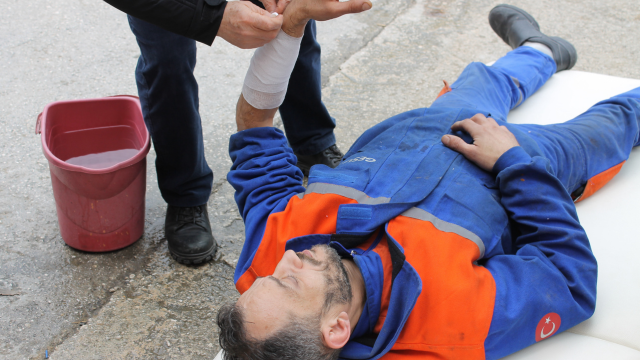

Choosing suitable first aid courses UK employers and employees can rely on involves more than finding a programme that issues a certificate. Workplace first aid is part of an employer’s wider health and safety arrangements, and the appropriate level of training should be determined by the risks, workforce and circumstances of the workplace.
A small low-risk office does not necessarily need the same first-aid provision as a construction site, warehouse or manufacturing plant. Similarly, somebody who takes a general online first-aid awareness course should not automatically be treated as equivalent to an employee who has completed appropriately assessed Emergency First Aid at Work or First Aid at Work training.
Effective training should prepare people to respond calmly to genuine emergencies. That can include recognising when somebody is seriously ill, controlling bleeding, helping an unconscious casualty, beginning CPR and obtaining professional medical assistance quickly.
For organisations, appropriate training strengthens workplace safety and forms part of wider emergency planning. For individuals, it can build confidence and practical competence that may be useful across many industries.
This guide explains workplace requirements, CPR training UK, the main types of first-aid course and how to choose training that actually matches the organisation’s needs.
What Are First Aid Courses and Why Are They Important?
First aid courses teach people how to provide immediate assistance to somebody who becomes injured or ill before professional medical help takes over.
The objective is not to turn learners into doctors, paramedics or nurses.
First aiders work within a much narrower role: recognise the situation, protect the casualty from further harm, provide appropriate immediate assistance and summon emergency help when required.
Training may cover topics such as:
- assessing an incident safely;
- unconscious casualties;
- cardiopulmonary resuscitation;
- AED use;
- choking;
- bleeding;
- shock;
- burns;
- seizures;
- fractures;
- common workplace illnesses.
The exact content depends on the course.
A general awareness course may introduce first-aid principles. EFAW focuses on emergency workplace response, while FAW includes a broader range of injuries and illnesses.
Some workplaces also require additional training for particular hazards.
First aid bridges the gap before professional help arrives
An ambulance does not appear the instant an emergency occurs.
The first few minutes can therefore matter.
If somebody suffers cardiac arrest, for example, colleagues may need to recognise the emergency, call 999, begin CPR and use an available AED before ambulance professionals arrive.
In another workplace, the immediate issue might be serious bleeding, burns or an injury caused by machinery.
Effective first-aid arrangements, emergency response and basic medical support are designed around the situations that could reasonably arise in that particular environment.
Why First Aid Training Is Important in UK Workplaces
First-aid provision is not simply an optional employee benefit.
Employers have legal responsibilities for workplace safety, emergency preparedness and employee welfare.
In Great Britain, the Health and Safety (First-Aid) Regulations 1981 require employers to provide adequate and appropriate equipment, facilities and personnel so employees can receive immediate assistance if injured or taken ill at work.
Importantly, the illness or injury does not necessarily need to have been caused by the job.
Someone could suffer a cardiac arrest at their desk, experience a serious allergic reaction during lunch or collapse because of an unrelated health condition.
The employer’s first-aid arrangements, emergency procedures and response measures still matter.
The law does not prescribe one identical solution
HSE deliberately uses the words adequate and appropriate.
That means employers need to assess what their workplace actually requires through a suitable first-aid needs assessment.
Factors can include:
- hazards and workplace risks;
- workforce size;
- previous accidents or incidents;
- shift patterns;
- remote work;
- lone working;
- first-aider absences;
- distance from emergency services;
- members of the public on site.
A workplace with chemicals, machinery or significant manual work is likely to require a different level of first-aid provision from a small administrative office.
First aid is only one part of workplace safety
first aid courses UK responds after somebody becomes injured or ill.
It should not replace accident prevention, risk control or wider health and safety measures.
A business should not accept a dangerous machine simply because several employees know first aid.
Strong workplace safety, risk management and accident prevention start with identifying hazards and controlling them.
First-aid arrangements then provide an emergency response when prevention is not enough.
Essential First Aid Skills and Qualifications
Workplace first-aiders need both knowledge and practical competence, including the ability to respond calmly and appropriately during an emergency.
Scene assessment
Before helping, a first-aider should consider whether the scene is safe.
Creating a second casualty helps nobody.
Possible hazards could include:
- electricity;
- fire;
- traffic;
- chemicals;
- unstable equipment.
Training should therefore encourage a rapid safety assessment, hazard awareness and risk check before direct intervention.
Recognising responsiveness and breathing
Recognising serious illness quickly is fundamental to effective emergency care.
Current Resuscitation Council UK guidance recommends calling 999 promptly when someone is unresponsive and assessing their breathing while emergency assistance is being arranged.
An unresponsive person who is not breathing normally should be treated as being in cardiac arrest.
CPR
Modern CPR training UK should reflect current Resuscitation Council UK guidance and recognised resuscitation practice.
For an adult in cardiac arrest, chest compressions should be delivered at approximately 100–120 per minute and around 5–6 cm deep.
Learners trained to provide rescue breaths can use a 30:2 compression-to-breath sequence.
Those who are not trained to ventilate can give continuous chest compressions.
Practical CPR training matters because rhythm, compression technique, correct positioning and confidence are difficult to develop through reading alone.
AED use
Automated External Defibrillators are designed to analyse a casualty’s heart rhythm and advise or deliver a shock when appropriate.
Anyone can use an AED.
The device provides instructions to the rescuer.
Workplace training can nevertheless improve confidence and emergency readiness, particularly because people may hesitate during a real emergency simply because they have never handled the equipment.
Bleeding control
A first aider may need to manage significant external bleeding until emergency professionals arrive.
Training should teach appropriate bleeding-control techniques and the importance of protecting both casualty and responder.
More specialised workplaces may require additional first-aid training where severe bleeding is a foreseeable hazard.
Choking
Choking can develop rapidly.
First-aid training should help learners distinguish serious airway obstruction from less severe coughing and respond appropriately.
Current training should follow recognised UK first-aid guidance rather than old techniques remembered from many years ago.
Unconscious casualties
First aiders should understand how to manage someone who is unresponsive but breathing normally, including the circumstances in which a recovery position may be appropriate.
The casualty should continue to be monitored while professional medical help is obtained.
Best First Aid Courses in the UK
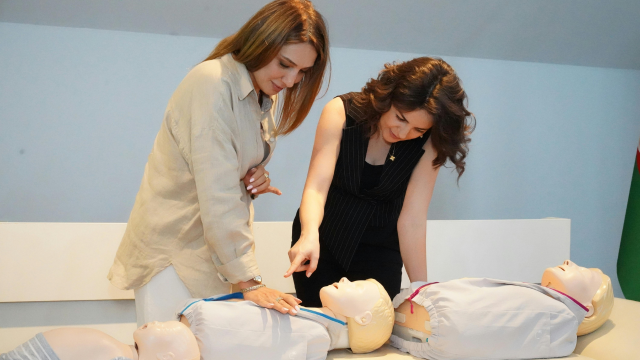
The best course is the one that satisfies the employer’s first-aid needs assessment and provides credible, appropriate practical training.
Several workplace first-aid routes are common.
Emergency First Aid at Work
Emergency First Aid at Work, or EFAW, is commonly suitable where the employer’s needs assessment identifies a requirement for trained first-aiders but the range of workplace risks does not justify the broader FAW syllabus.
HSE’s current training-provider guidance specifies at least six hours of training and assessment over a minimum of one day.
EFAW covers essential emergency first-aid situations and basic workplace response.
It is therefore often associated with lower-risk workplaces, although the actual choice must come from the needs assessment rather than the job sector alone.
First Aid at Work
First Aid at Work, or FAW, is broader.
It includes the EFAW content alongside additional injuries and illnesses.
HSE currently expects at least 18 hours of training and assessment over a minimum of three days.
FAW may be more appropriate in larger or higher-risk workplaces or where the range of foreseeable injuries requires broader first-aid competence.
For example, organisations involving machinery, construction, warehousing or manufacturing may find FAW more appropriate than relying exclusively on basic emergency provision.
FAW Requalification
First-aid-at-work certificates last for three years.
Before expiry, a qualified first-aider can complete appropriate requalification training to maintain their workplace first-aid competence.
Current HSE guidance specifies at least 12 hours over a minimum of two days for FAW requalification.
Allowing certification to expire creates a practical problem because the individual is no longer considered competent to act as the workplace first-aider for regulatory purposes.
Employers should therefore track expiry dates and renewal requirements rather than discovering the issue during an emergency or inspection.
Paediatric First Aid
Workplaces involving babies or children may require training appropriate to those risks.
Early-years settings, for example, operate under specific requirements beyond the general adult workplace-first-aid framework.
A general FAW course should not automatically be assumed to satisfy every childcare or paediatric first-aid requirement.
Employers should check the rules applying to their particular service.
Specialist First Aid Training
Some workplaces require additional emergency-care training because of particular hazards or environments.
Examples may include:
- forestry;
- remote work;
- specialist chemicals;
- severe bleeding risks;
- offshore work;
- diving.
The first-aid needs assessment should identify whether EFAW or FAW alone adequately covers foreseeable emergencies and workplace-specific risks.
Training Arena Health and Safety Learning
Training Arena currently provides a Health and Safety in the Workplace course that includes a section on the UK legal framework for workplace first aid.
This type of learning can help managers or employees understand how first aid, emergency response and basic medical assistance fit within broader health and safety responsibilities.
However, employers need to distinguish that from qualifying an employee as a workplace first-aider.
Where the needs assessment requires an EFAW or FAW first-aider, the selected programme should satisfy HSE expectations for syllabus, duration, practical instruction and assessment.
A general online completion certificate should not automatically be substituted for that requirement.
First Aid Course Requirements, Certification, and Professional Development
One of the most common misconceptions about workplace first aid courses UK is that HSE maintains a list of officially approved training providers.
It no longer does.
The previous HSE approval system ended in 2013 in Great Britain.
This places more responsibility on employers when selecting a suitable training provider and checking course quality.
Employers need to check the provider
HSE guidance recommends that employers carry out due diligence when selecting a training organisation.
Relevant questions include:
Does the organisation have competent trainers?
Does the course cover an appropriate syllabus?
Does it include adequate practical training?
Is assessment carried out properly?
Are quality-assurance systems in place?
Is current recognised first-aid guidance being followed?
Buying the cheapest available certificate without investigating the training may not demonstrate that the employer has selected a competent provider.
Regulated qualifications are one option
Training providers may offer regulated qualifications through recognised awarding organisations.
Others operate through voluntary accreditation schemes or independently.
HSE does not require one single provider model.
The employer’s responsibility is to establish that the training is competent, suitable and meets the needs identified through the workplace assessment.
Can workplace first aid be learned entirely online?
HSE accepts blended learning where appropriate.
However, current guidance places particular importance on practical assessment.
For EFAW and FAW, practical skills should be assessed through direct observation.
That creates an obvious limitation for purely theory-based online courses.
A person may understand the written steps of CPR but still position their hands incorrectly, compress too shallowly or be unable to demonstrate a safe practical response.
Online learning can support knowledge, awareness and theoretical understanding.
It should not automatically be treated as evidence of hands-on workplace first-aid competence.
How long does first-aid certification last?
For workplace FAW and EFAW purposes, certificates normally last three years.
Before expiry, the first-aider needs appropriate requalification.
HSE also strongly recommends annual refresher training.
This recommendation makes sense because practical skills can fade when they are rarely used.
First aiders should therefore think about competence, practice and emergency readiness throughout the three-year period rather than only returning to the subject shortly before the certificate expires.
First Aid Skills, Workplace Responsibilities, and Practical Applications
The legal responsibility for first-aid arrangements rests with the employer, but trained first-aiders have an important practical role.
The first-aider
A workplace first-aider is someone who has completed training appropriate to the circumstances and holds a valid certificate of competence.
They may need to:
- assess casualties;
- provide immediate first aid;
- call or coordinate emergency assistance;
- use workplace first-aid equipment;
- hand over information to ambulance professionals.
They should also remain within their training and competence.
first aid courses UK is not an invitation to diagnose complicated medical conditions.
The appointed person
An appointed person is different from a trained first-aider.
Where the employer’s needs assessment determines that trained first-aiders are unnecessary, an appointed person takes responsibility for the basic arrangements.
This can include:
- looking after first-aid equipment;
- maintaining facilities;
- calling emergency services.
HSE does not require the appointed person to undertake first-aid training merely to perform that role.
An employer should not describe an untrained appointed person as though they were an EFAW- or FAW-qualified first-aider.
First-aid equipment
Workplaces need suitable first-aid equipment.
There is no universal statutory shopping list for every first-aid kit because contents should reflect workplace needs.
An office and a remote engineering site may require different provision.
The kit should also be checked.
Expired, missing or inaccessible supplies provide little protection.
Employees need to know the arrangements
Training one employee and hiding the first-aid box in a locked cupboard is not an adequate emergency system.
Workers should know:
- who the first-aiders or appointed people are;
- how to contact them;
- where equipment is kept;
- how to summon emergency assistance.
This information becomes particularly important in large premises and shift-based workplaces.
First Aid and Emergency Response
first aid courses UK is one part of a wider emergency response system.
A serious workplace incident may require coordination between first-aiders, supervisors, emergency services and other safety personnel.
For example, after a machinery accident the immediate priorities might involve:
- making the area safe;
- summoning professional assistance;
- providing first aid within competence;
- controlling access to the area;
- handing the casualty over to ambulance professionals.
Later, the employer may need to investigate the incident and consider statutory reporting requirements.
The first-aider’s priority during the emergency remains the casualty rather than conducting the investigation.
Benefits of First Aid Training for Employees and Businesses

The strongest reason for first-aid training is the ability to respond appropriately when somebody needs immediate help.
There are also wider organisational benefits.
Faster action in emergencies
A trained employee is more likely to recognise when a situation is serious and act quickly.
With cardiac arrest, early CPR and defibrillation can be particularly important.
Current Resuscitation Council UK guidance emphasises immediate action rather than waiting passively for professional responders.
Greater employee confidence
Emergencies can make people freeze.
Practical training provides a familiar framework.
The first aider may still feel nervous, but they are more likely to have a clear sequence to follow.
Better safety awareness
First-aid courses can increase awareness of the consequences of workplace incidents.
Someone trained to treat burns, for example, may become more conscious of why burn-prevention controls matter.
This should complement rather than replace formal workplace safety training.
Support for legal compliance
Where a needs assessment identifies trained first-aiders as necessary, suitable training helps employers meet their first-aid obligations.
The benefit arises from having appropriate provision, not simply owning certificates.
Skills with wider value
Employees may also use first-aid knowledge outside work.
Cardiac arrest, choking and serious illness can happen at home or in public.
Training therefore develops practical skills that can have broader social value.
How to Choose the Right First Aid Course in the UK
Choosing between first aid courses UK providers should start with the workplace, not the course catalogue.
Step 1: Complete the needs assessment
Consider:
- number of employees;
- hazards;
- previous incidents;
- work patterns;
- lone workers;
- remote locations;
- public visitors;
- first-aider absence.
Only then decide what provision is appropriate.
Step 2: Decide whether you need EFAW, FAW or additional training
A relatively low-hazard workplace may find EFAW appropriate.
Higher-risk environments may require FAW or additional specialist content.
Avoid choosing EFAW simply because it is shorter.
Step 3: Examine the training format
For practical first-aid competence, learners need genuine opportunities to practise and be assessed.
Check whether the programme includes hands-on CPR, casualty assessment and other relevant practical elements.
Step 4: Check the provider
Look beyond marketing statements.
Review trainer competence, course syllabus, assessment arrangements, quality assurance and alignment with current HSE and Resuscitation Council UK guidance.
Step 5: Confirm certificate status
Ask exactly what certificate is being issued.
“First aid certificate”, “CPD certificate” and “FAW certificate of competence” should not be assumed to mean the same thing.
Step 6: Plan for expiry and refresher training
Record certification dates and arrange refresher learning.
A strong first-aid system should not depend on someone remembering their certificate expiry a week beforehand.
Future Trends in Workplace First Aid and Health and Safety Training
first aid courses UK remains highly practical, but training methods are evolving.
More blended learning
Digital modules can efficiently teach theory before learners attend practical assessment.
This can reduce classroom time while preserving hands-on skill development.
The important principle is not whether technology is used but whether practical competence is still taught and assessed properly.
Updated CPR guidance
Resuscitation science changes over time.
The 2025 Resuscitation Council UK guidelines introduced an important change for adult basic life support: rescuers should call 999 promptly when somebody is unresponsive rather than delaying the call until they have fully determined breathing status.
Training providers should therefore keep material current rather than repeatedly teaching an outdated algorithm.
Wider AED availability
AEDs are becoming increasingly visible in workplaces and public spaces.
Current UK guidance emphasises that anyone can use one.
Businesses installing AEDs should consider accessibility, maintenance and whether employees know where the device is located.
More scenario-based training
Practical scenarios can help learners connect individual techniques to real emergency response.
Instead of demonstrating CPR in isolation, a scenario can require the learner to assess safety, identify unresponsiveness, call for help, start CPR and obtain an AED.
This better reflects how emergencies actually unfold.
Greater integration with health and safety systems
First-aid arrangements increasingly sit within wider approaches to occupational health, emergency planning, wellbeing and risk management.
Training records, incident information and changes in workplace hazards can all help employers reassess whether their provision remains appropriate.
Key Takeaways
The most important points about first aid courses UK workplaces should consider are:
- employers need adequate and appropriate first-aid arrangements based on their own workplace circumstances;
- there is no universal statutory number of first-aiders suitable for every organisation;
- EFAW normally requires at least six hours over one day;
- FAW normally requires at least 18 hours over three days;
- workplace first-aid certificates normally last three years;
- HSE strongly recommends annual refresher training;
- HSE no longer approves individual first-aid training providers, so employer due diligence matters;
- current CPR training UK should follow Resuscitation Council UK guidance;
- first-aid training supports wider workplace safety but does not replace hazard prevention;
- general online health and safety learning can improve awareness but should not automatically be treated as proof of EFAW or FAW practical competence.
FAQ
What are first aid courses?
First aid courses teach people how to provide immediate assistance when somebody becomes injured or ill. Workplace programmes can include CPR, AED use, unconscious casualties, choking, bleeding, shock and other injuries or illnesses relevant to the course level.
Why is first aid training important in the UK workplace?
Training helps employees respond appropriately before professional medical care arrives. It can also form part of an employer’s legal first-aid arrangements where the workplace needs assessment identifies trained first-aiders as necessary.
What are the requirements for workplace first aid training?
Employers should conduct a first-aid needs assessment and determine appropriate personnel, equipment and facilities. Where trained first-aiders are required, the employer should select a competent provider and ensure the training matches the workplace risks.
Which first aid course is best in the UK?
There is no single best course. EFAW may be appropriate for some workplaces, while FAW or specialist training may be necessary in higher-risk environments. The employer’s first-aid needs assessment should drive the choice.
What skills are taught in first aid courses?
Depending on the programme, learners may develop casualty assessment, CPR, AED use, choking response, bleeding control and management of unconscious casualties, shock, burns and other injuries or illnesses.
How long does first aid certification last in the UK?
EFAW and FAW workplace certificates are normally valid for three years. HSE strongly recommends annual refresher training to help first-aiders maintain their skills.
What are the benefits of first aid training for employees?
Training can increase confidence, improve emergency-response skills and help employees recognise serious conditions more quickly. The skills may also prove useful outside work.
Who should complete workplace first aid training?
The employer’s needs assessment should determine how many trained first-aiders are necessary and the level of training they need. Factors include workforce size, hazards, shifts, absences, remote work and previous incidents.
Conclusion
Selecting appropriate first aid courses UK employers can depend on is ultimately a risk-based decision.
Businesses should begin with their workplace, workforce and likely emergencies. From there, they can decide whether an appointed person is enough or whether trained EFAW, FAW or specialist first-aiders are required.
The distinction between course types matters. Proper CPR training UK and practical first-aid assessment develop abilities that cannot be established simply by reading theory online. Flexible learning, including Training Arena’s broader health-and-safety content, can support knowledge development, but employers should verify that any course used to establish workplace first-aider competence satisfies the appropriate HSE expectations.
Good first-aid provision then needs to be maintained. Certificates expire, skills fade, employees change and workplace hazards evolve.
When first aid is integrated with health and safety, risk assessment and wider emergency response planning, it does more than satisfy a compliance requirement. It strengthens workplace safety by ensuring that when prevention fails and somebody genuinely needs immediate help, people know how to respond.